
Drinking water experiment #1: How much bleach is needed to kill an algae bloom?
-
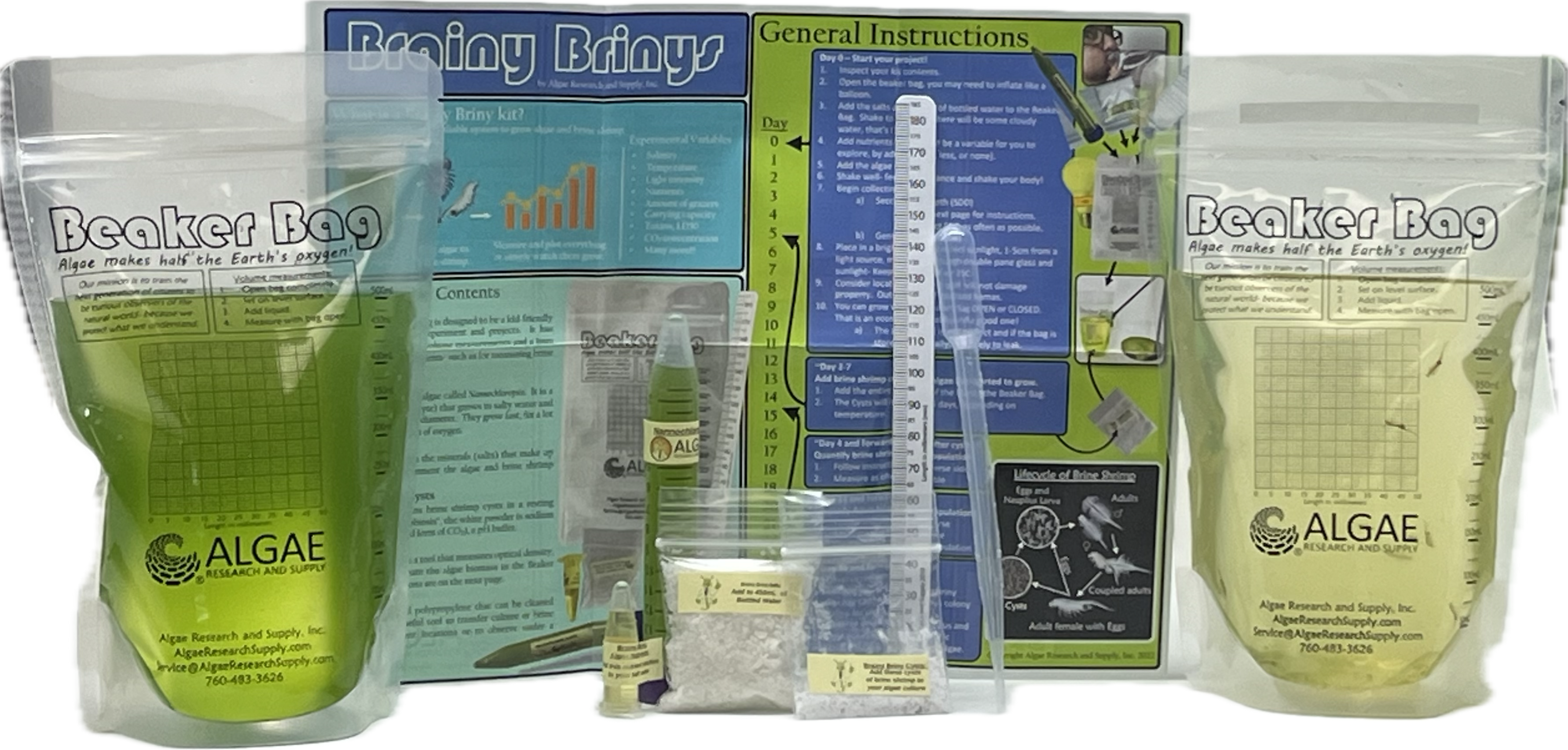
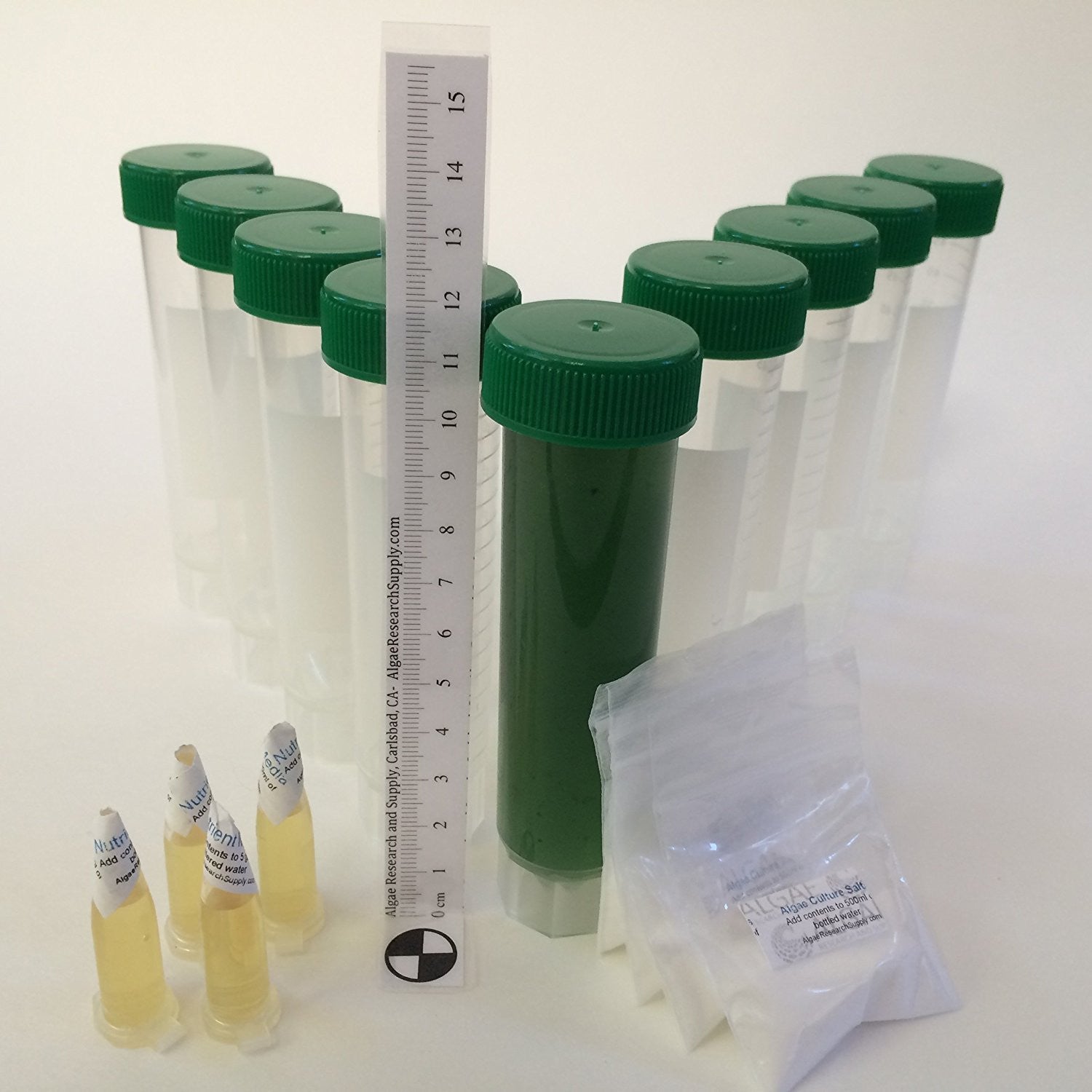
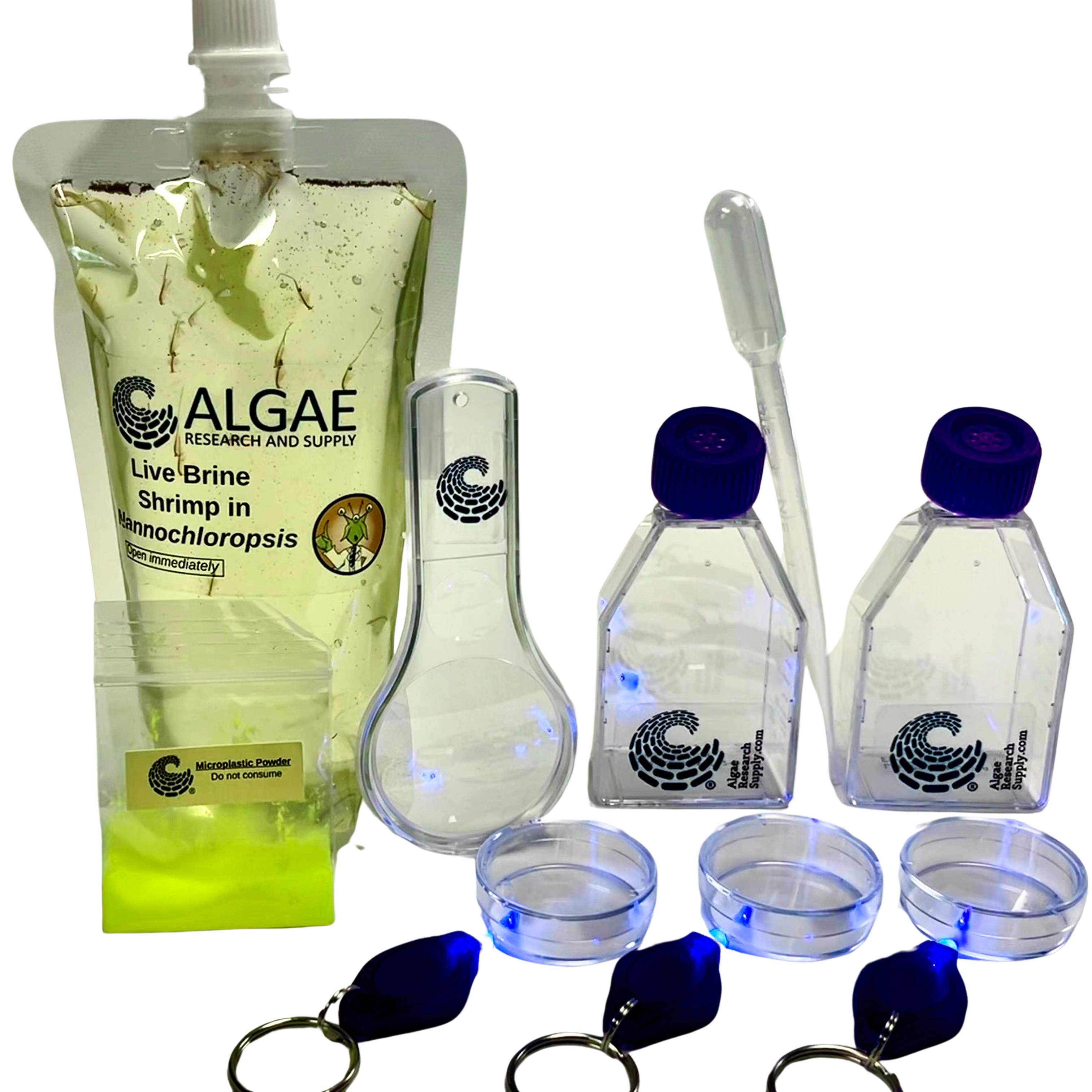
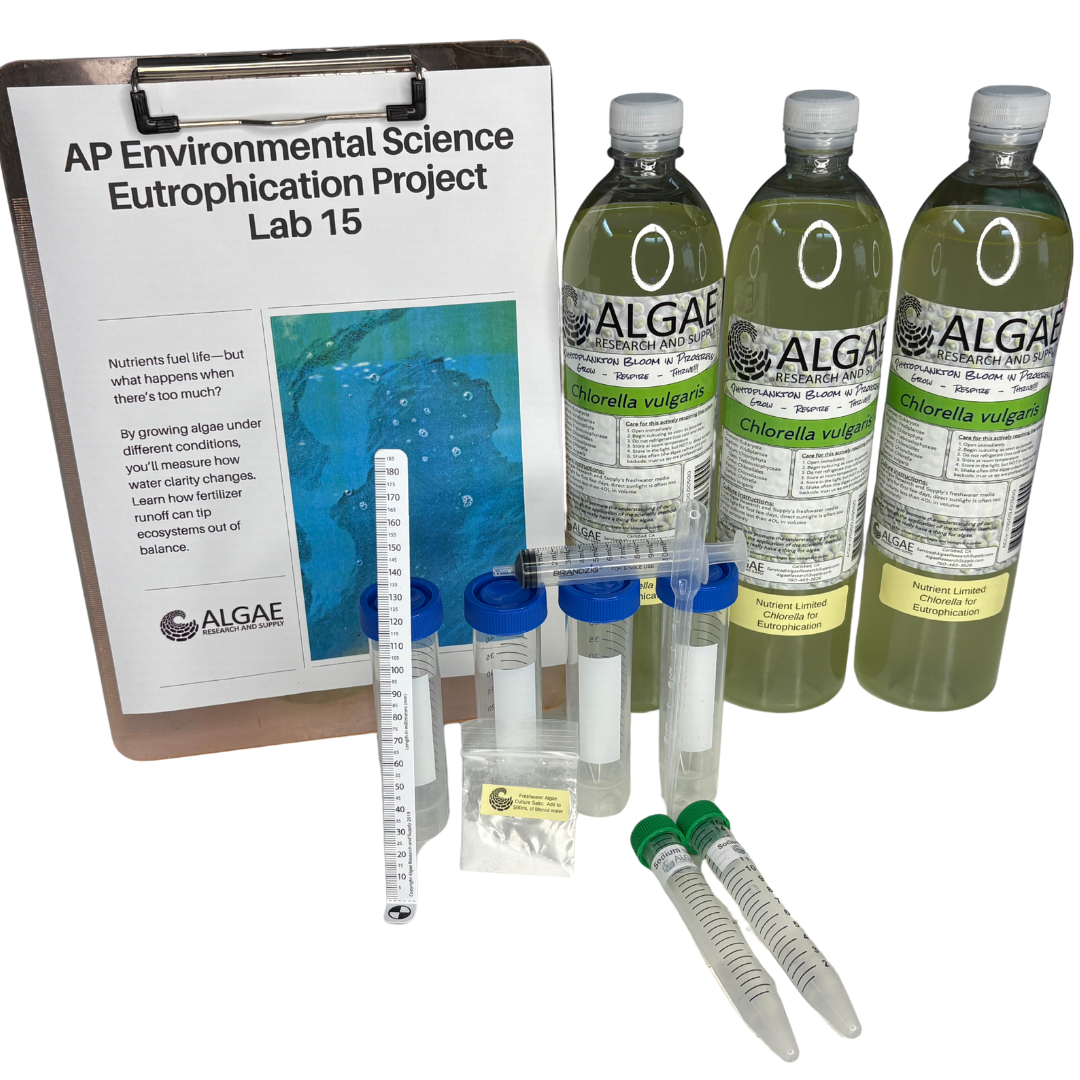
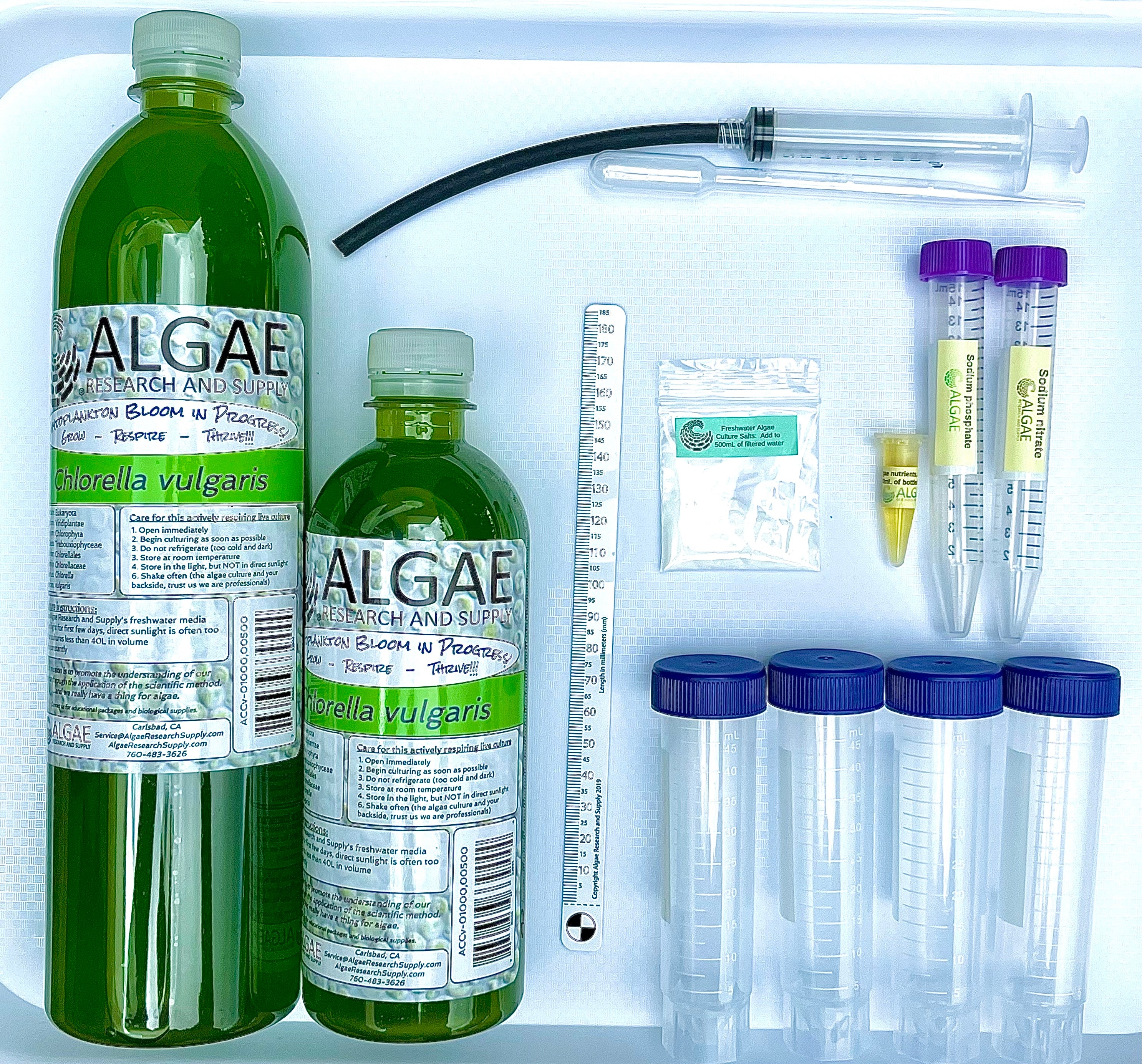
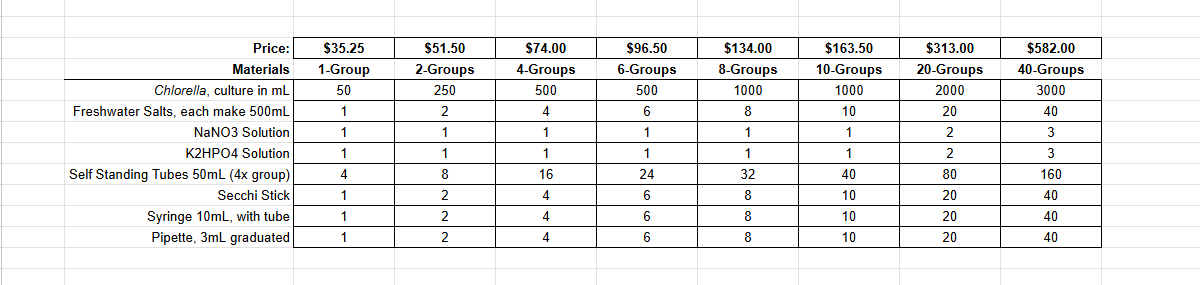
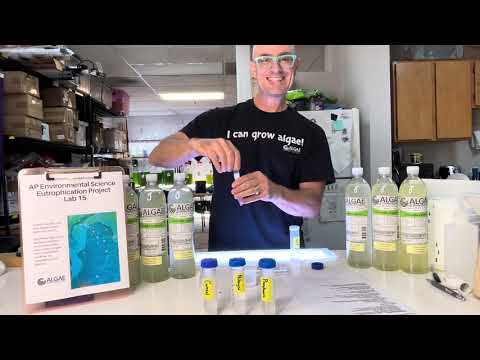
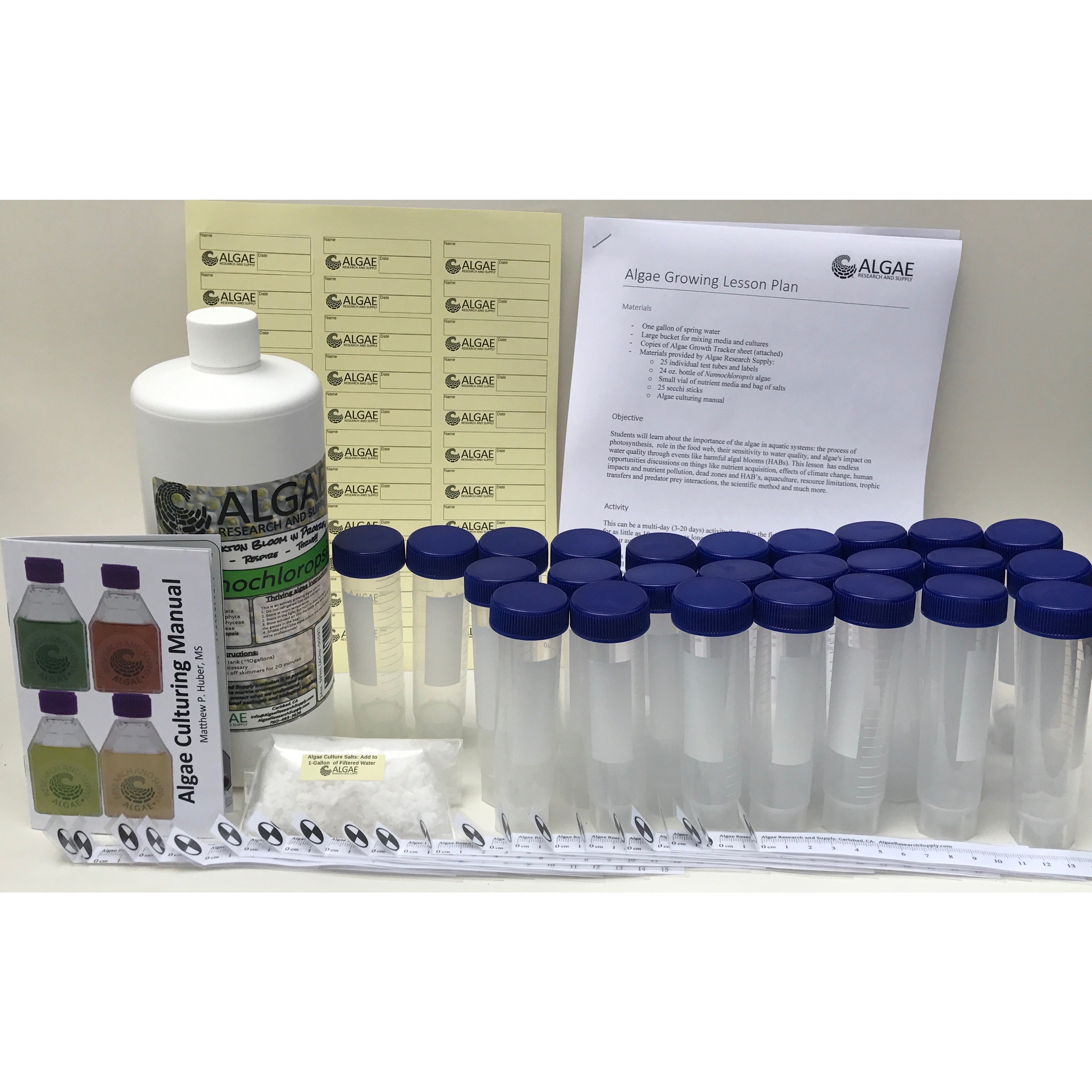
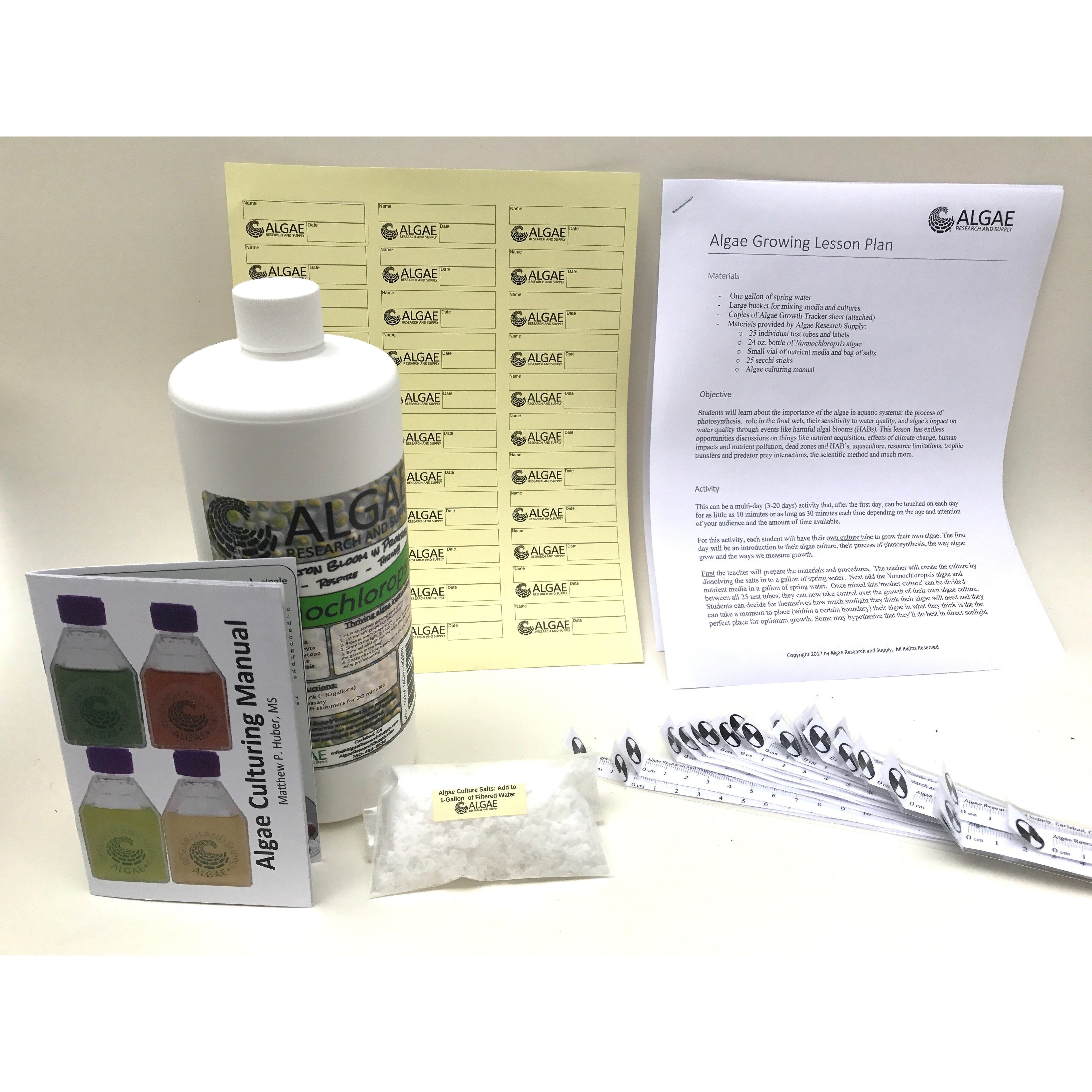
Materials (Algae Experiment Kit)

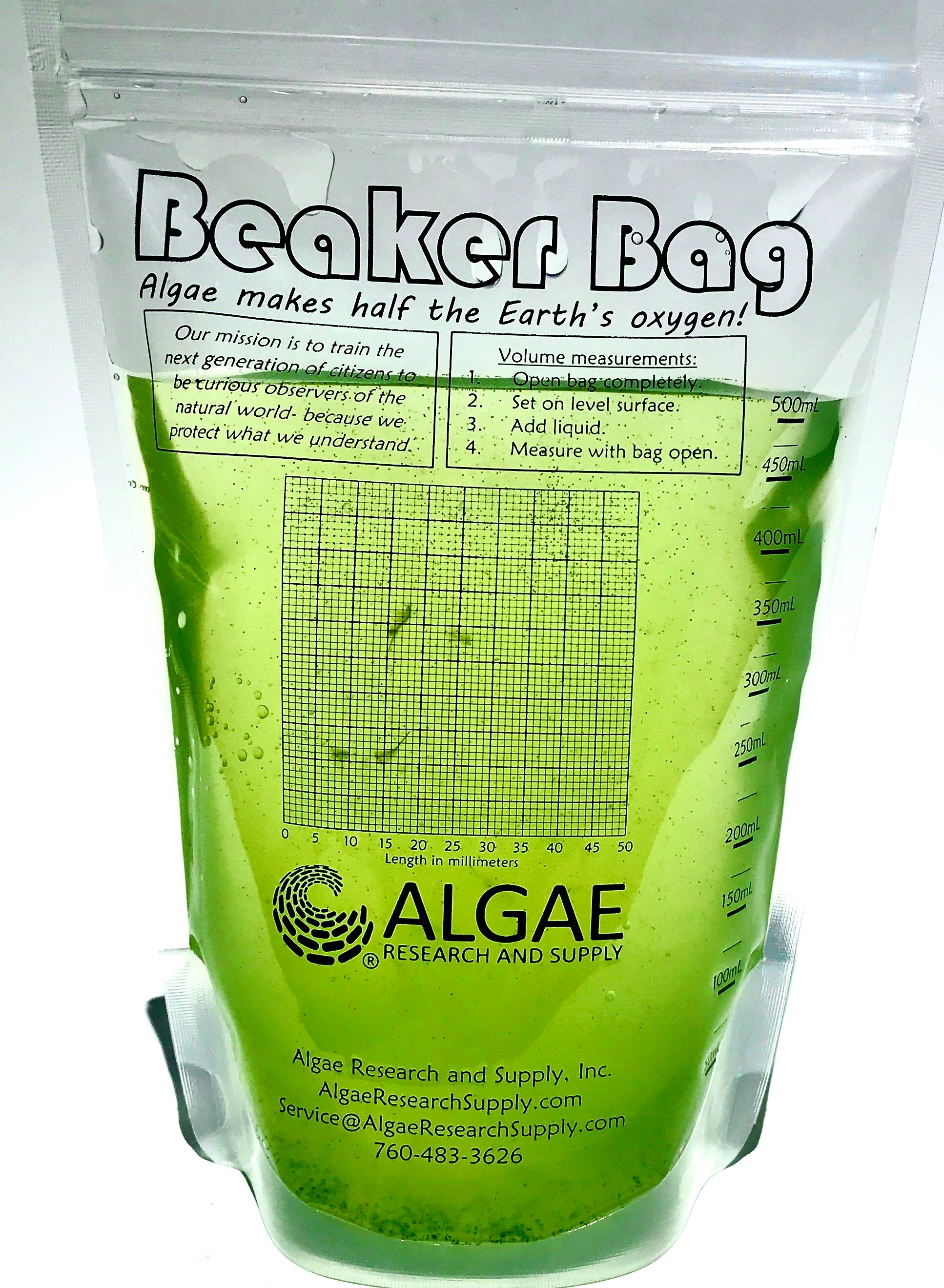
- Algae culture, Nannochloropsis or Chlorella
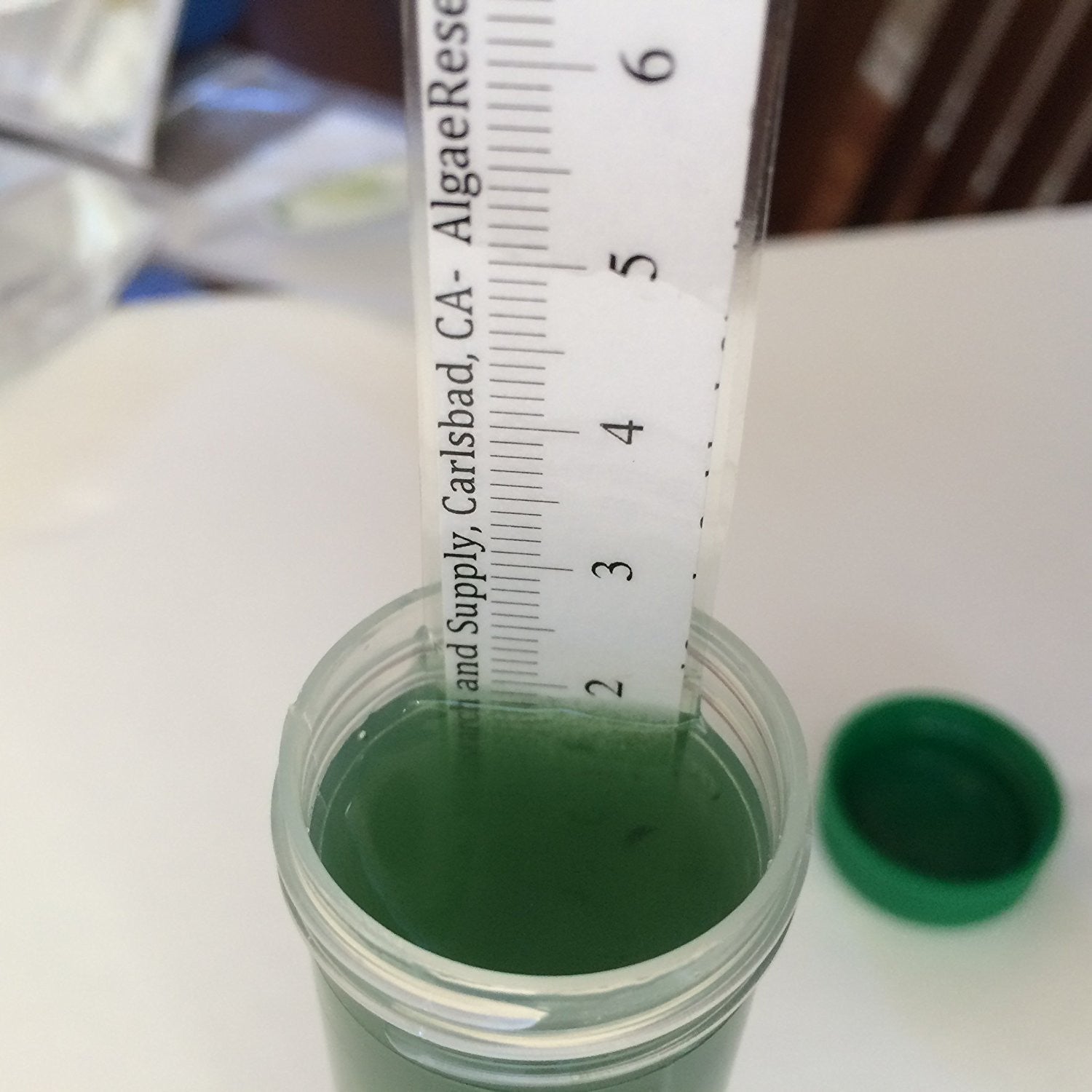
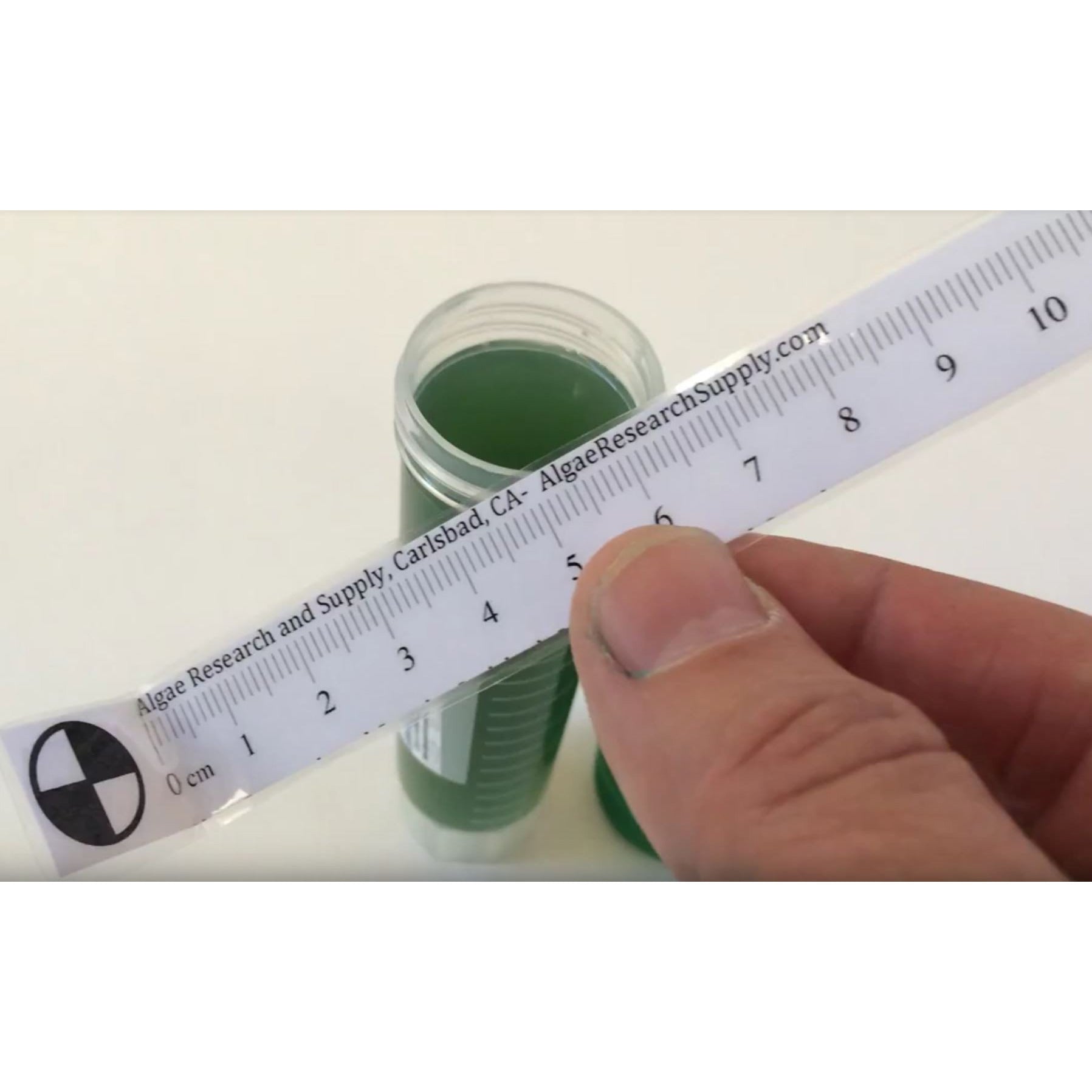
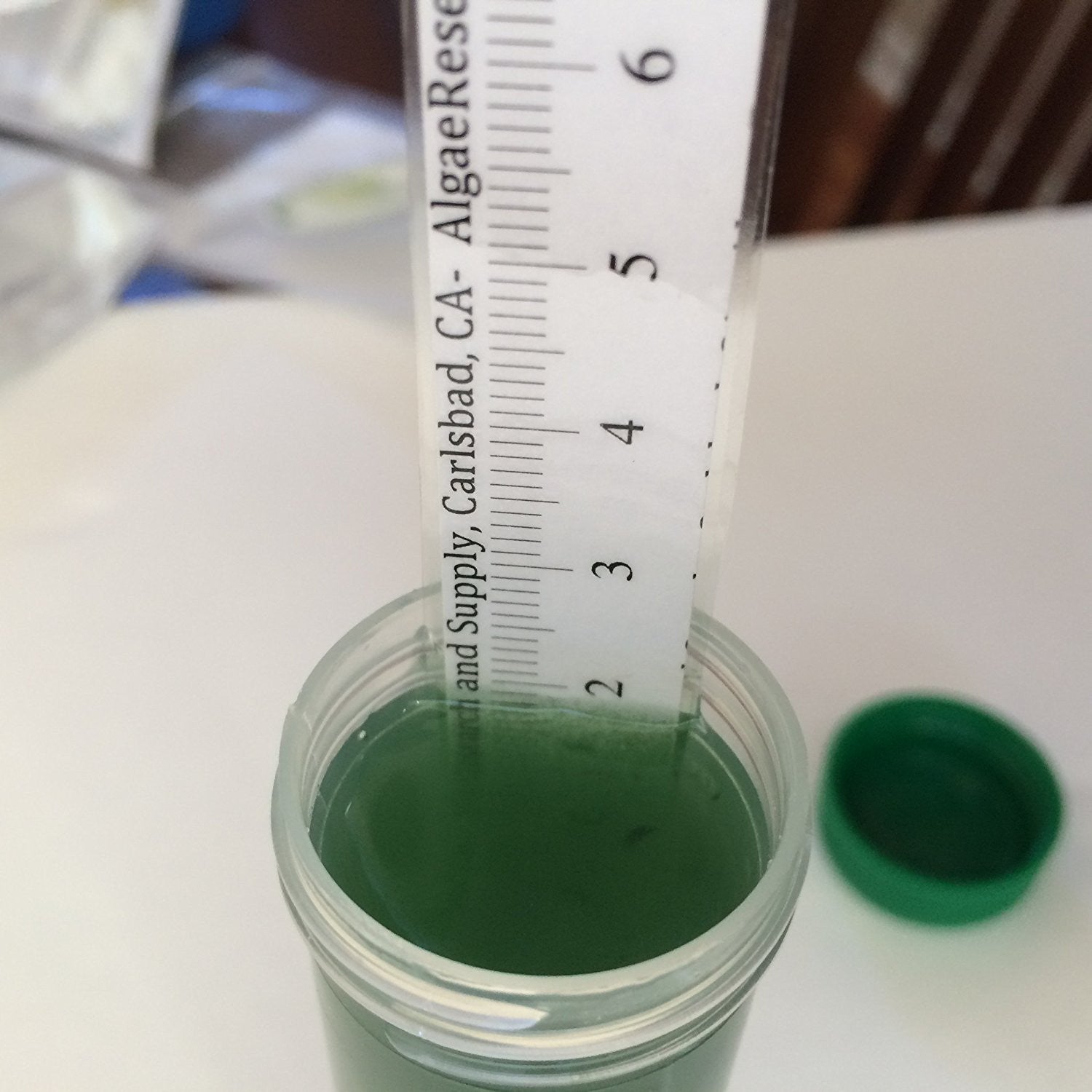
- Secchi stick
- Drippers
- Test tubes or self standing tubes
- Teacher supply, bleach
- Methods
- Record the concentration of sodium hypochlorite on the bottle of household bleach, should be between 3-6.5%.
- Wear eye protection when using bleach~
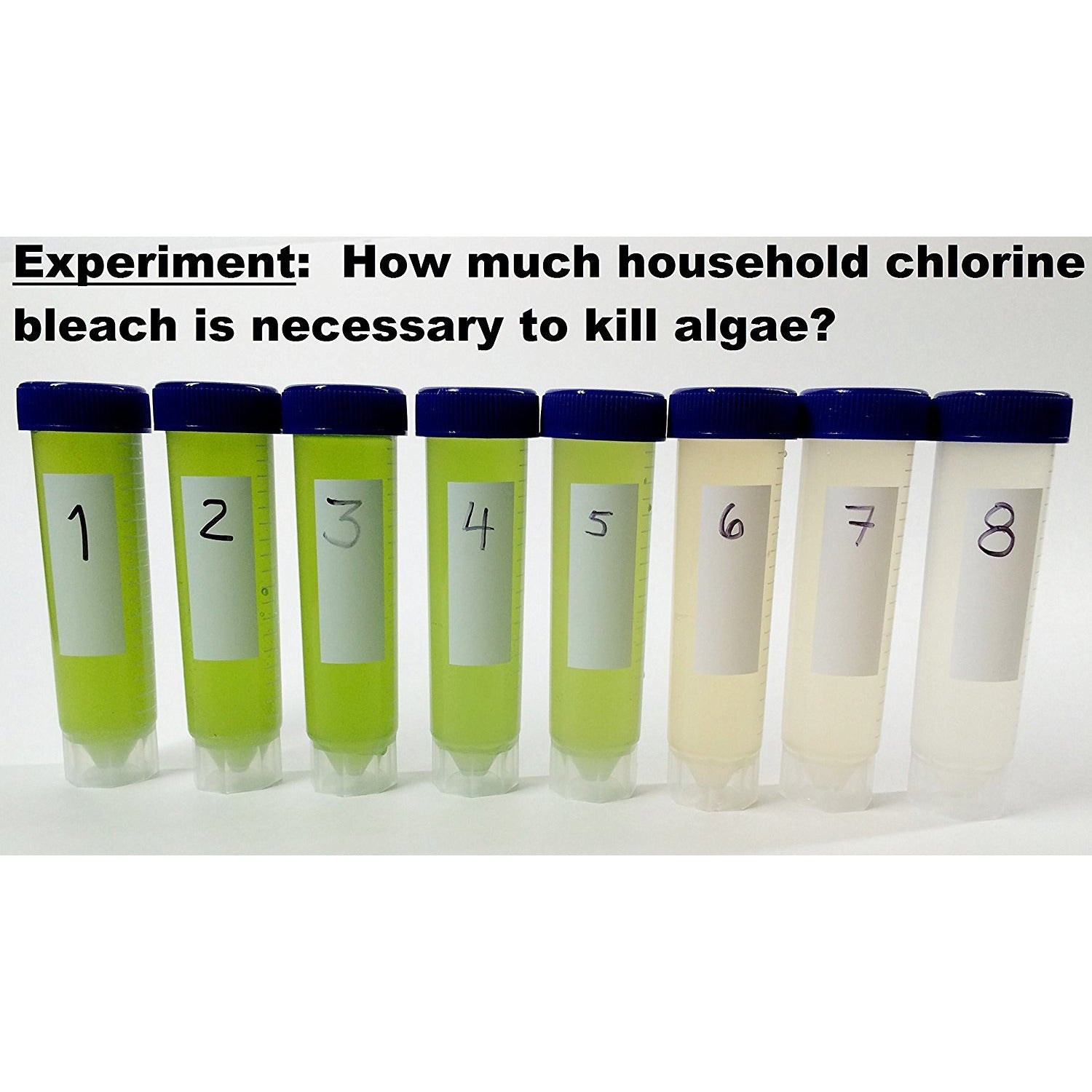
- Pour equal amounts of algae in to each of eight tubes
- Record the secchi disk depth
- Observe using all of our senses
- Add bleach in exponential method (see table below), or whatever works best

|
bottle |
mL bleach |
Drops bleach |
|
1 |
0 |
0 |
|
2 |
0.05 |
1 |
|
3 |
0.1 |
2 |
|
4 |
0.2 |
4 |
|
5 |
0.4 |
8 |
|
6 |
0.8 |
16 |
|
7 |
1.6 |
32 |
|
8 |
3.2 |
64 |
3. Observe for at 1 minute, 10 minutes, and 100 minutes, and 1 day
- 1-minute: The algae at the higher end of the concentrations will turn white immediately after the bleach is added. This is really cool for kids to see. The algae immediately will not sink, thus the SSD will not change
- 10-minutes: The algae in the middle ranges will turn white, but perhaps not as completely as the higher concentrations. Again there should be no change in ssd
- 100 minutes: all the ‘bleaching’ should be complete. SSD may begin to change as algae sinks to the bottom. Caution should be done to prevent resuspension of the algae (dont shake it). Why… by day-1 the dead algae will sink and the SSD will increase.
- 1- day: the dead will sink, the live will continue to live

Ignite curiosity and foster hands-on learning with our comprehensive algae experiment kits. Designed for educators, students, and science enthusiasts, each kit provides all necessary materials to explore the fascinating world of algae. From culturing diverse algal species to conducting experiments on growth conditions, these kits offer a practical approach to understanding ecological and biological concepts. Ideal for classrooms, science fairs, or personal exploration, our kits make the study of algae accessible and engaging for all ages.
Featured collection