


Using Algae Beads to Teach Photosynthesis, Cellular Respiration, and Experimental Design

Photosynthesis and Respiration
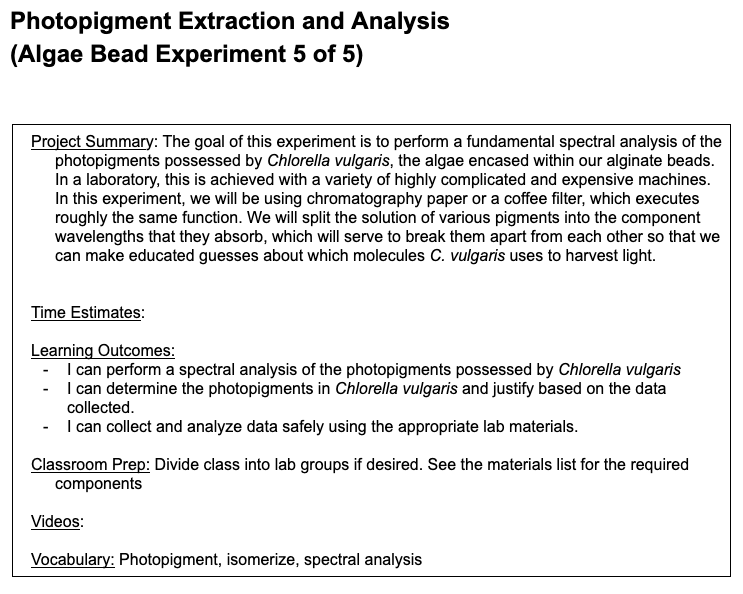
Pigment Extraction
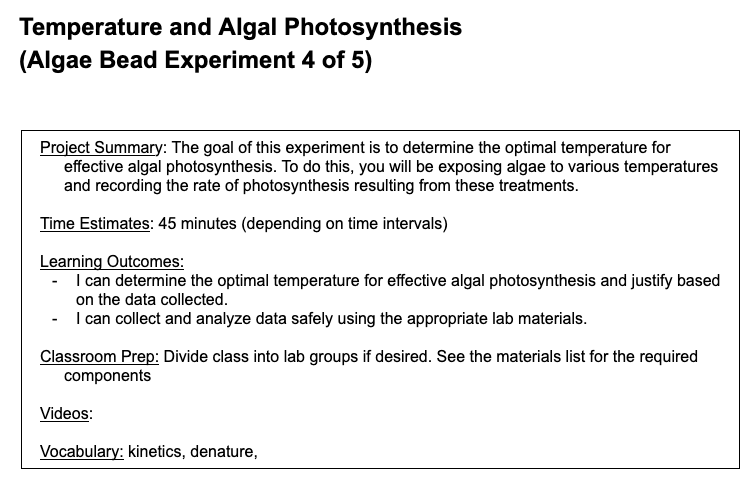
Experimental Design
Enzyme Activity- Peroxidase
Overview: Algae Beads
Algae beads are a hands-on tool for teaching photosynthesis, cellular respiration, and experimental biology using living microalgae. Each bead contains photosynthetic algae immobilized in a clear matrix, allowing students to observe biological processes in real time.
When exposed to light, the algae consume carbon dioxide during photosynthesis. This change in carbon dioxide levels alters the pH of the surrounding solution, producing a visible color change when a pH indicator is present. Students can directly observe how environmental conditions affect biological activity.
In the classroom, algae beads are used to investigate variables such as light intensity, wavelength, temperature, and surface area. Students collect data, graph results, and use evidence to explain how and why these factors influence photosynthesis.
This approach moves beyond demonstration and supports student-driven experimentation, helping learners develop skills in data collection, variable control, and scientific reasoning.
What are algae beads?
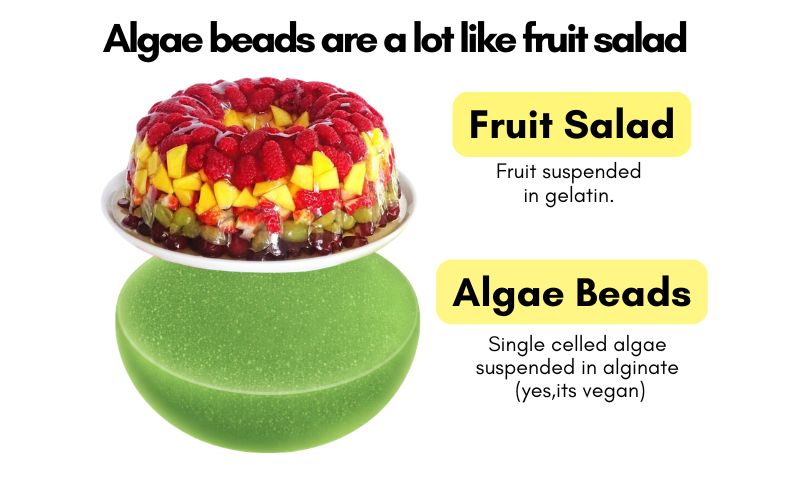
What Are Algae Beads?
Algae beads are small, transparent spheres that contain living photosynthetic microalgae immobilized within a sodium alginate matrix. This structure creates uniform, easy-to-handle units that allow students to work with living organisms without the complexity of maintaining liquid cultures. The algae inside each bead carry out photosynthesis and cellular respiration, responding quickly to changes in their environment. When paired with a pH indicator, these biological processes produce visible color changes, allowing students to observe and measure activity in real time.
What Do Algae Beads Replace in Traditional Biology Instruction
Algae beads replace common photosynthesis labs such as leaf disk flotation and aquatic plant (e.g., Elodea) oxygen bubble counting, which are often slow, variable, and difficult to quantify. These traditional methods rely on indirect or inconsistent measurements and can be affected by plant condition and light variability. In contrast, algae beads use fast-responding microalgae in a standardized system. When paired with a pH indicator, they provide a clear, rapid color change that reflects shifts in carbon dioxide, allowing for more consistent, sensitive, and measurable observations of photosynthesis and respiration.
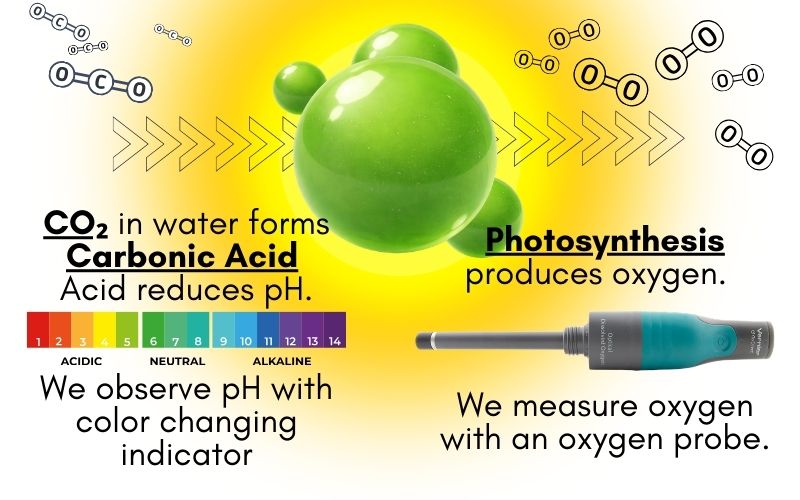
Science behind algae beads
Observe Photosynthesis Through Oxygen Production
During photosynthesis, algae produce oxygen (O₂) as a byproduct of light-driven reactions. This oxygen diffuses out of the beads and into the surrounding water, where it can be measured with an oxygen probe. As photosynthetic activity increases, dissolved oxygen levels rise, providing a quantitative way to track the rate of photosynthesis alongside the visual pH changes.
Observe Photosynthesis and Respiration Through pH Changes
Carbon dioxide (CO₂) dissolves in water to form carbonic acid (H₂CO₃), which lowers pH. In the presence of light, algae beads carry out photosynthesis and remove CO₂ from solution, shifting the equilibrium away from carbonic acid and increasing pH. This change is easily observed using a color-changing pH indicator, allowing students to directly see how biological activity alters water chemistry in real time.
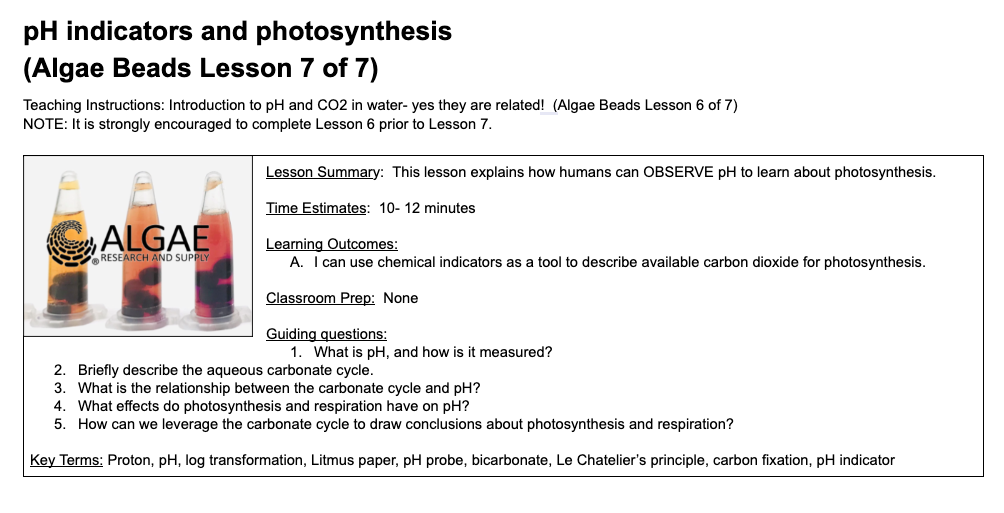
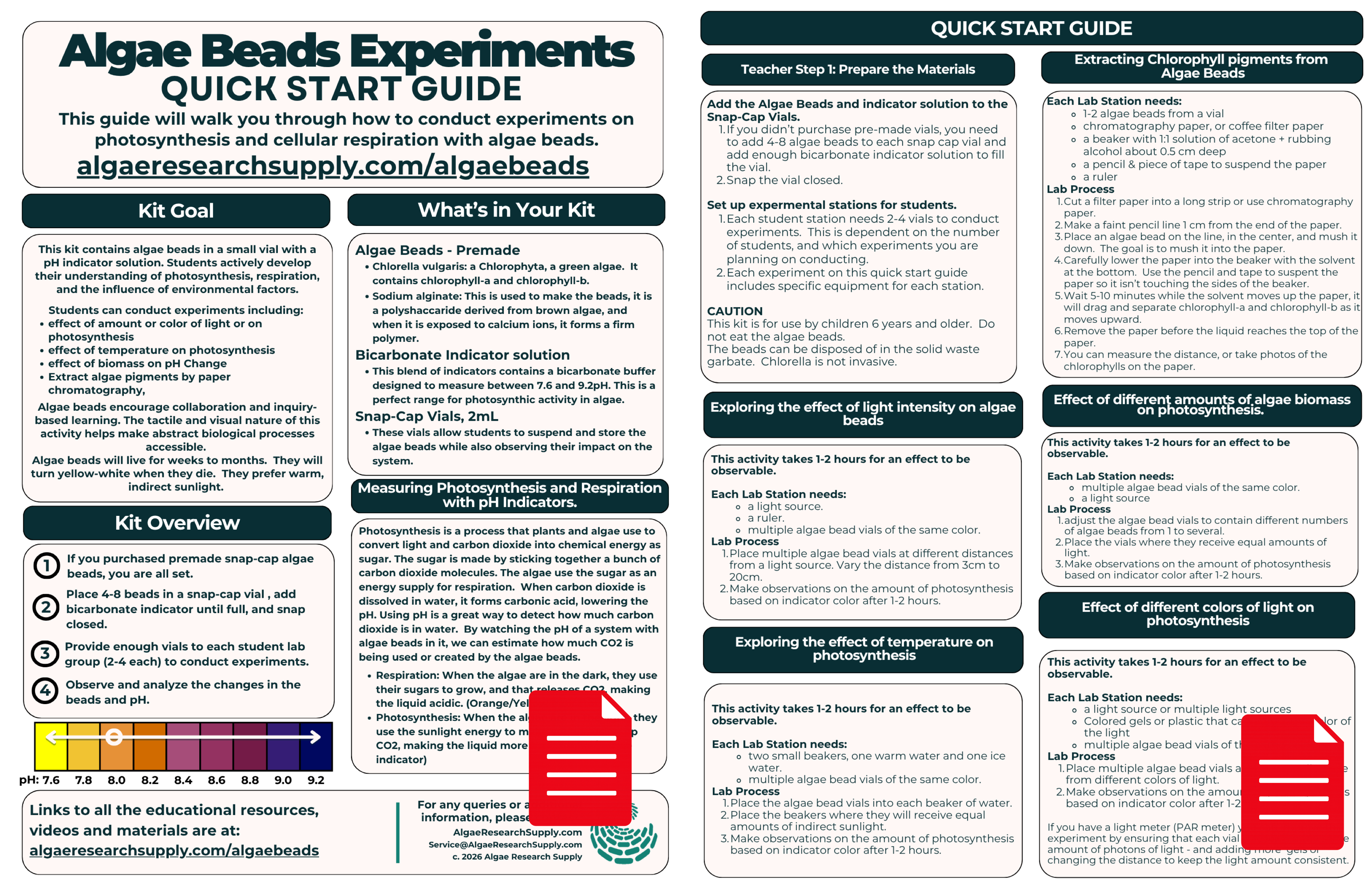
Instructional Materials for Algae Beads






FAQs about Algae Beads
FAQ-Ordering
How long does shipping take?
Orders are typically shipped same day or next day.
If you need expedited handling, contact our office and we can usually accommodate urgent requests. Faster shipping options are also available at checkout.
We can delay shipment for up to 1-year. We are happy to take Purchase Orders as well.
How many algae beads do I need for my class?
We recommend:
- Minimum: 2 per group (treatment and control)
- Ideal: 3 replicates per condition
So:
- 3 treatment + 3 control = 6 ready-to-go beads sets per group
Multiply by the number of student groups in your class.
FAQ-Storage
Are the algae alive inside the beads?
Yes. The algae remain alive and metabolically active while immobilized in the gel of sodium alginate. They will live for 1-4 months if kept out of bright light and at room temperature.
How long do algae beads last in storage?
Algae beads typically last 1 to 4 months when stored properly.
Store at room temperature and allow low ambient light daily so they remain healthy.
No direct sunlight, but rather keep them on your bench or desktop. Let them turn light purple by the end of the day. This keeps them "on scale" for pH, so that you can use them anytime.
How should algae beads be stored?
Store algae beads:
- At room temperature
- In their original solution
- Never in direct sunlight
They should receive low ambient light, but direct sunlight should never be used.
At the end of the day the pH should increase a little bit, we like to see it up to a slight purple color. This light keeps the cells alive (they are photosynthetic after all). This is also functionally important for your classroom as they can be used immediately rather than waiting for them to become "on scale" for the pH.
If you keep them in the DARK for a long time the pH will drop LOWER than the scale. Its ok, you will just need to keep them in the light for a while until the pH raises up to the scale that it changes the indicator solution color.
Should I store algae beads in the refrigerator?
No. Do not refrigerate algae beads. They are living organisms and should be kept at room temperature under ambient light.
FAQ- Using Algae Beads
How fast do algae beads change color?
If the beads are within the active pH range of the indicator, color change typically occurs within 20 to 45 minutes.
If the beads have been sitting in the dark for extended periods (such as during shipping), the pH may be much lower due to respiration (CO₂ forming carbonic acid). In this case, it may take longer to observe the initial color change.
To prevent the "sitting in the dark" conditions stated above, store the algae beads on the bench/desktop in the light. Make sure they turn light purple by the end of the day. This lets you know they are alive and ready for science at a moments notice!
How fast do algae beads change back?
While it only takes 20-45 minutest to turn purple (increase in pH due to photosynthesis removing CO2- carbonic acid), returning from purple to yellow typically takes 1 to 2 days in the dark.
Place beads in a drawer or wrap them in foil to allow respiration to lower the pH.
What is in the pH indicator solution?
The pH indicator solution is a carbonate indicator containing:
- Bromothymol blue
- Cresol red
It provides a colorimetric readout of pH and can also be used with a spectrophotometer for quantitative measurements.
Are algae beads kid safe?
Yes. The materials are generally recognized as safe (GRAS):
- Algae: Chlorella (food-grade)
- Matrix: Sodium alginate (food-grade)
They are safe for classroom use, but should not be eaten or inserted into eyes, ears, nose, your neighbors nose or ears, stored behind your ears or used as alternative medicine. However they are quite fond of Grateful Dead Music (not so much Phish).
What kind of light source should I use for algae beads?
- LED lights work very well
- Standard hardware store LED shop lights are sufficient
- Beads can be placed close to the light source for faster results
Do not use direct sunlight.
For optimal results, the Benchtop Algae Light is recommended. - we manufacture these.
What light intensity should I use for algae beads?
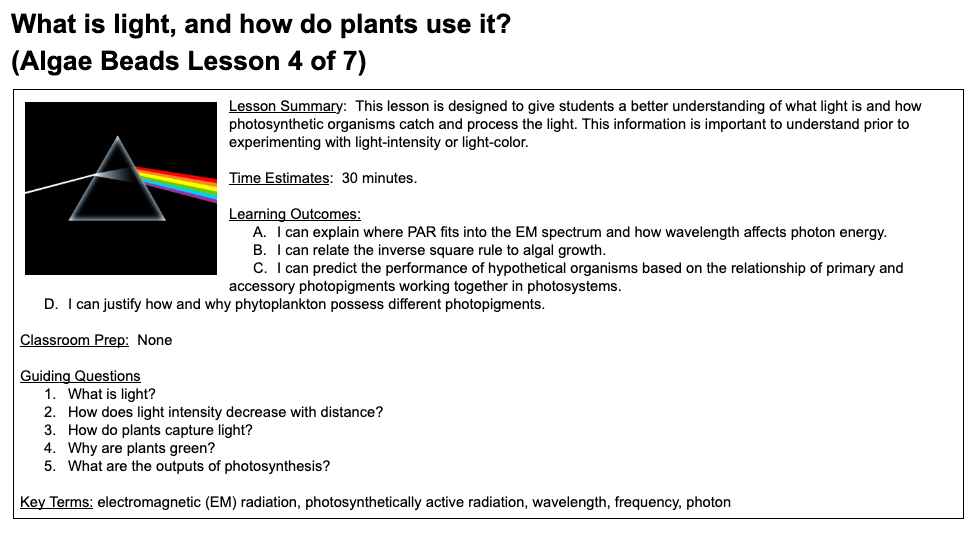
We're going to get nerdy here. Flux of light is photons per area per time.
Use approximately:
- 100 to 200 µmol photons/m²/s (ideal)
- Up to 700 to 800 µmol photons/m²/s (acceptable upper range)
Do not use direct sunlight (Sunlight is >2000 µmol photons/m²/s), as it can damage or kill the algae quickly.
Will brighter light increase photosynthetic rate in algae beads?
Yes. Increasing light intensity increases the rate of photosynthesis up to a limit.
This relationship can be explored using a photosynthesis vs. irradiance (P vs. I) curve, which can be used as an advanced classroom investigation.
How much biomass is in each algae bead?
Each bead contains approximately 1 mg of dry algae biomass. They are mostly water followed by algae biomass and sodium alginate.
Dry one out and weigh it! (More like, dry out 10-20 of them as your analytical balance may have a hard time with a small mass)
Are algae beads food grade? Can I eat them?
They are made from food-grade materials, but they are not intended for consumption.
Do not eat them, do not take them on vacation, do not tell them they are special - if you do they get clingy and will want to move in with you and they will camp out on the couch eat all your peanut butter and won't do their own dishes.
How can I tell if the algae beads are still alive?
If the beads are green, they are most likely alive and functional. I know its a little simplistic, but color functionally it is an effective test.
To get a change in pH place them about 2mm from an LED light and leave them alone. After a short time they should change color (if they are alive). If they have been in the dark for a few days or weeks, it may/will take a few hours to have photosynthesis increase the pH so that it is on-scale for the pH indicator solution.
We recommend that you store the algae beads at ambient temperature and ambient light so that these LIVING organisms can have energy to live.
How many algae beads do I need for my class?
We recommend:
- At minimum: 2 per group (treatment and control)
- Ideal setup: 3 replicates per condition
So:
- 3 treatment + 3 control = 6 beads per group
Multiply by the number of student groups in your class to determine total needed.
For example a class with 36 students (OMG thats a full class) that has 4 students per group will have 9 groups. You will need 54 ready-to-go algae beads->. 9 groups x 6 beads per group = 54.

What are Algae Beads
A short video on how we make algae beads, how to use them to teach photosynthesis and respiration, and how to buy them.

Enzymes: Peroxidase Activity using Algae Beads
A short video showing how to use algae beads as a way to demonstrate the relation ship between enzyme and substrate.

Pigment Extraction from Algae Beads
A short video showing how to use algae beads as to show paper chromatography using two different solvents.