
College and University
Introductory Biology
Real organisms for first year biology, at a price that works for big sections.
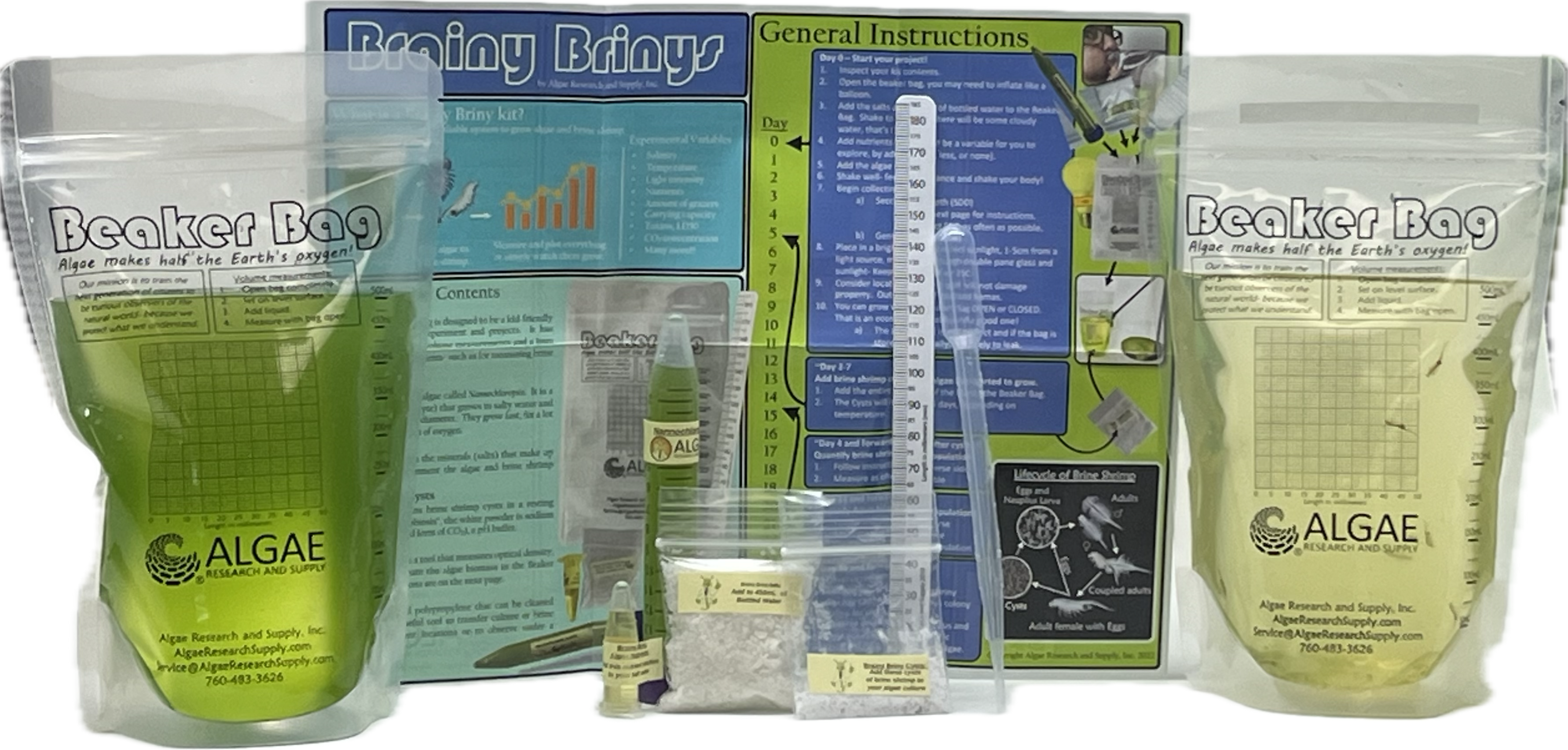
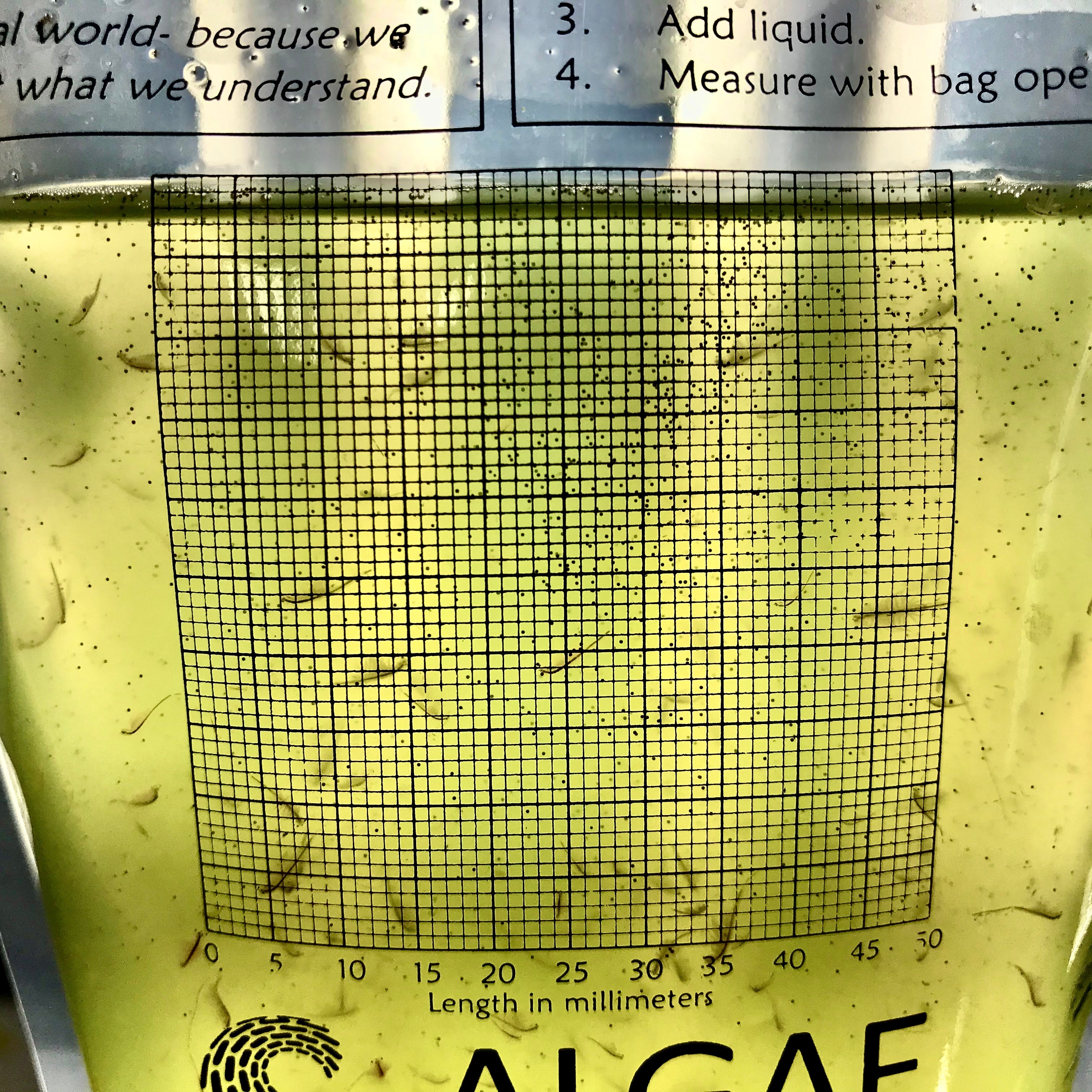
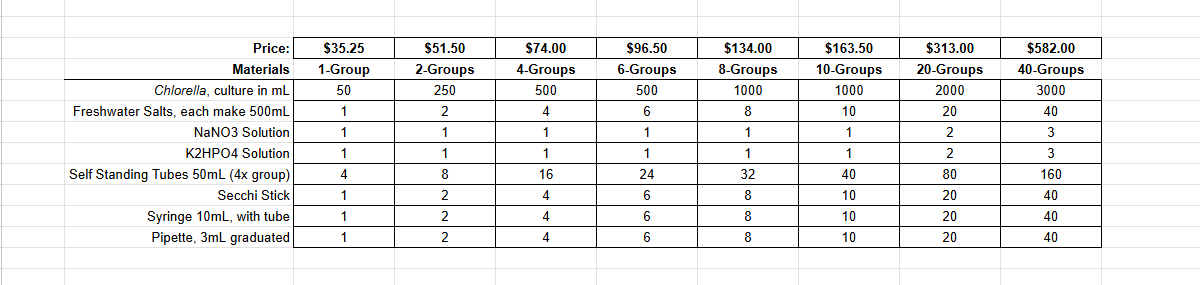
One set of labs for majors and non-majors alike. Students grow living algae and brine shrimp and measure photosynthesis, population growth and energy flow with their own data. You need a light, glassware and the kit, not special equipment, and the cost per student stays low enough for community college sections with many lab groups. Majors sections take the analysis further. Non-majors sections get simple steps and results they can see.

Where it fits
How our labs fit this course
Energy and metabolism
Where it fits: the weeks on photosynthesis and cellular respiration.
What the lab does: students measure both processes in living algae. Majors calculate rates. Non-majors watch an indicator change color in light and dark.
Ecology and human impact
Where it fits: the population, ecosystem and environment weeks near the end of the term.
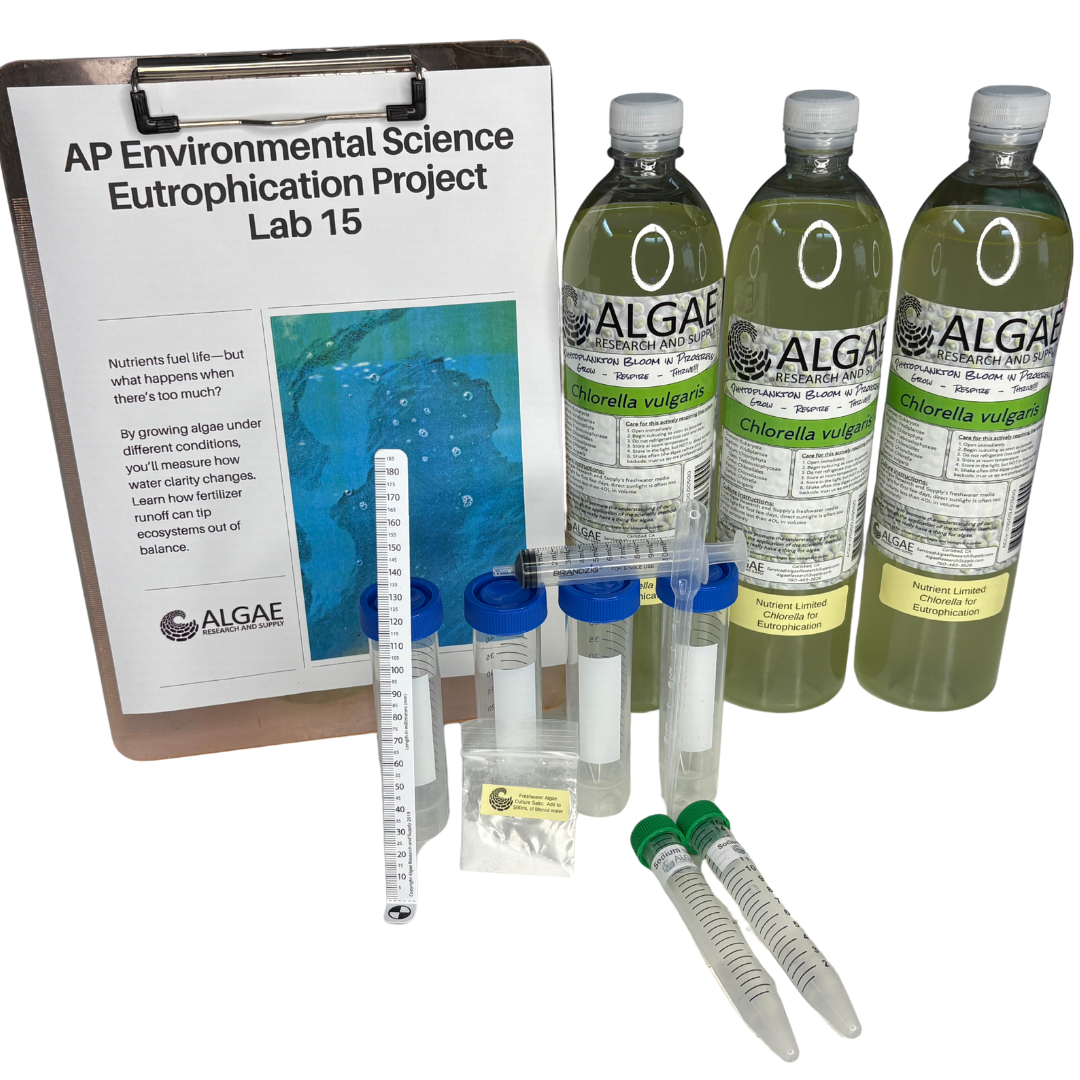
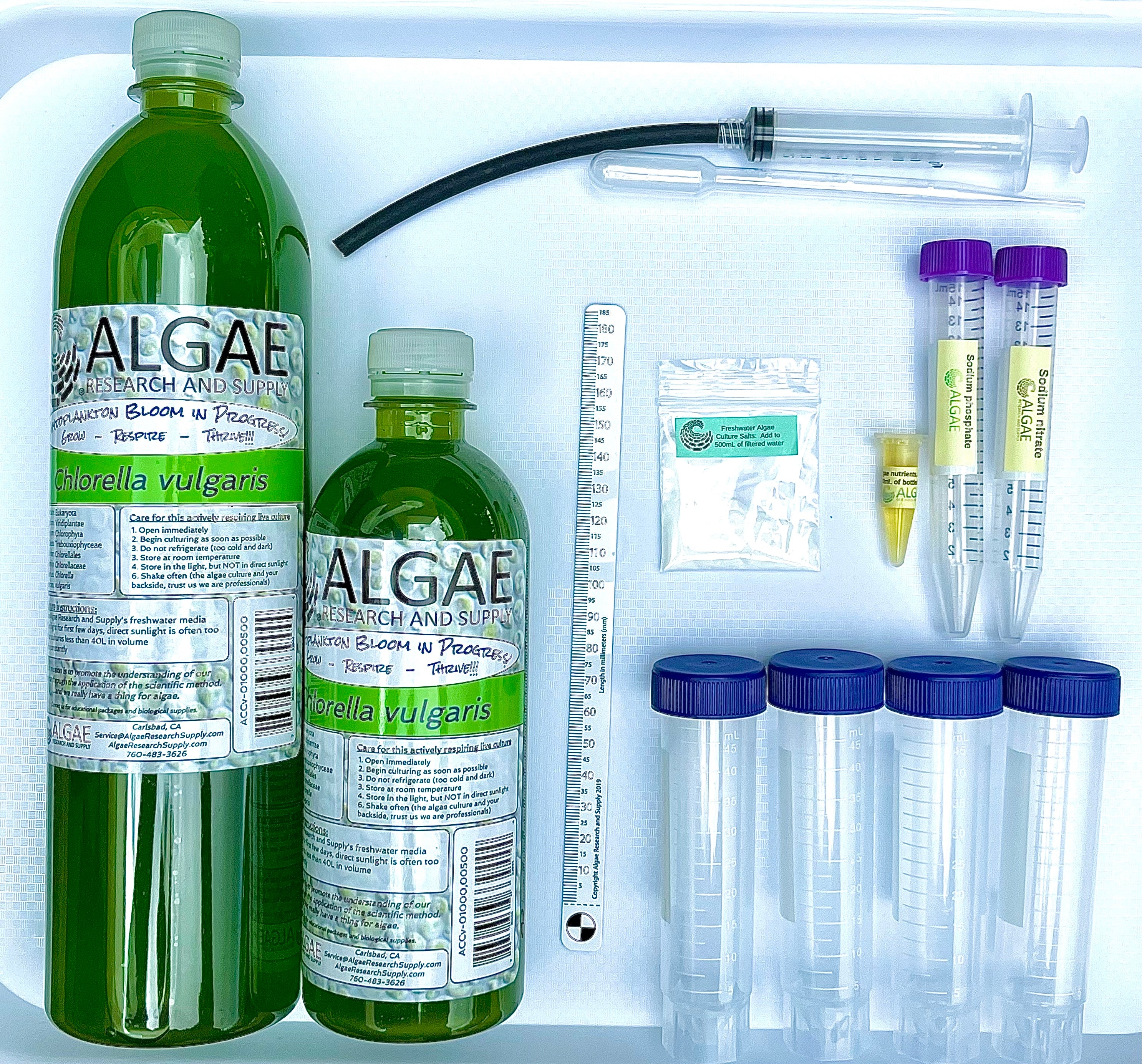
What the lab does: students count a growing population, follow energy between two trophic levels, and see what extra nutrients do to water.
Lab skills
Where it fits: early in the term, when students learn sterile technique and the microscope.
What the lab does: students streak and isolate algae on agar plates. Best suited to majors sections.
Lessons for this course
Our Lesson Plans
Photosynthesis and Cellular Respiration
Status: Being written now. Open the lab page for what students do and the kit.
Population Growth and Carrying Capacity
Status: Being written now. Open the lab page for what students do and the kit.
Energy Flow and Trophic Transfer
Status: Being written now. Open the lab page for what students do and the kit.
Eutrophication and Nutrient Pollution
Status: Being written now. Open the lab page for what students do and the kit.
Algal Isolation and Aseptic Technique
Status: Being written now. Open the lab page for what students do and the kit.
Kits for these lessons

Algae Beads: Make Your Own FULL KIT