
High School, grades 9 to 12
AP Biology
Living algae for the two AP Biology labs that matter most.
Students grow real algae and measure what it does. They track oxygen and carbon dioxide, count cells as a population grows, and follow energy from algae to brine shrimp. The lessons line up with Investigation 5 and Investigation 10.

Where it fits
How our labs fit this course
Unit 3 Cellular Energetics
Where it fits: Unit 3 Cellular Energetics and Investigation 5 Photosynthesis.
What the kit does: Algae beads change the color of an indicator as they take up carbon dioxide in the light, so students can measure photosynthesis rate and test variables like light.
Unit 8 Ecology
Where it fits: Unit 8 Ecology and Investigation 10 Energy Dynamics.
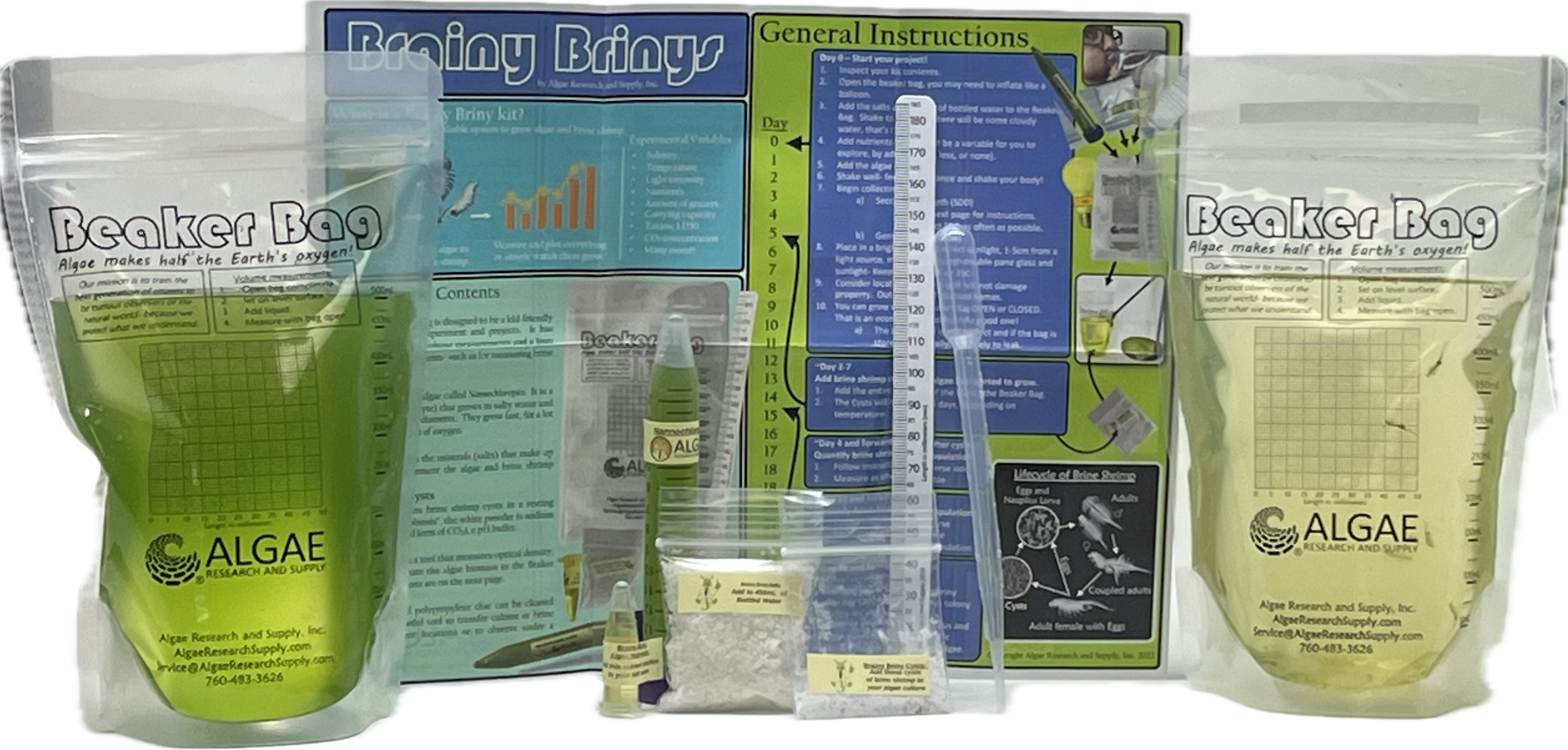
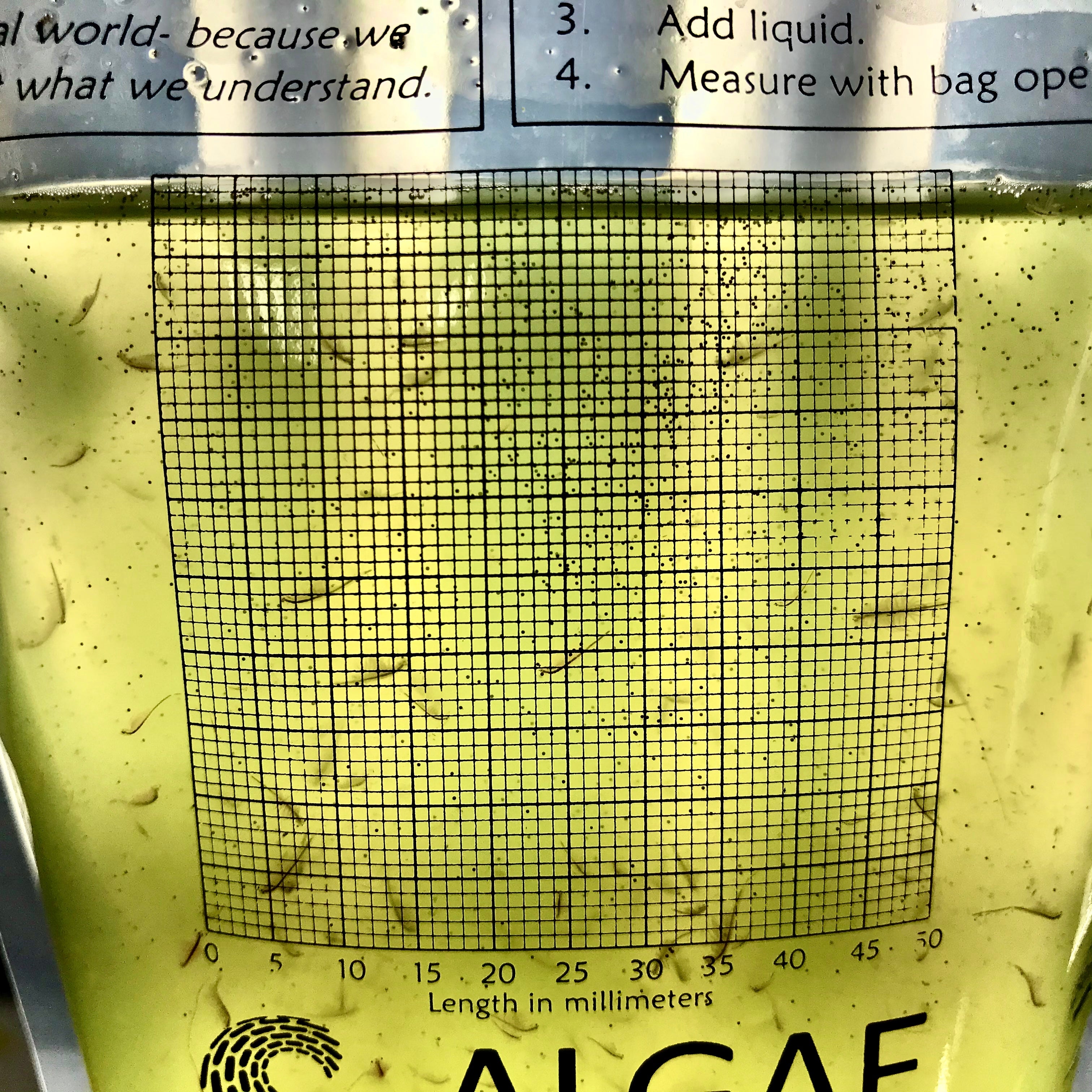
What the kit does: Algae feed brine shrimp in a closed system, so students can track biomass and energy moving from producers to consumers and watch a population grow and level off.
Unit 2 Cell Structure and Function
Where it fits: Unit 2 Cell Structure and Function.
What the kit does: Students look at living algae cells under the microscope. Honest fit: partial. The kit gives real cells to observe, but the unit's membrane and transport labs are not what it is built for.
Lessons for this course
Our Lesson Plans
Photosynthesis and Respiration in a Closed System
Status: Being written now. Open the subject page for the standard and the kit.
Carrying Capacity and Population Dynamics
Status: Being written now. Open the subject page for the standard and the kit.
Trophic Energy Transfer and Biomass
Status: Being written now. Open the subject page for the standard and the kit.
Light, Irradiance and Growth Rate
Status: Being written now. Open the subject page for the standard and the kit.
Toxicology and Dose Response
Status: Being written now. Open the subject page for the standard and the kit.
Bioprospecting and Microbial Diversity
Status: Being written now. Open the subject page for the standard and the kit.
Kits for these lessons

Algae Beads: Make Your Own FULL KIT