
High School Earth Science
Eutrophication and Nutrient Pollution
Add fertilizer and watch the water turn green.
Students add different amounts of nutrients to algae cultures and measure what happens. They see a bloom form and track nitrate as the algae use it up.

How the lab meets it
What students do that satisfies the standard
NGSS HS-LS2-6
Standard: Evaluate the claims, evidence, and reasoning that the complex interactions in ecosystems maintain relatively consistent numbers and types of organisms in stable conditions, but changing conditions may result in a new ecosystem.
What the kit does: Students test whether a nutrient change pushes a stable culture into a new state.
NGSS HS-ESS3-3
Standard: Create a computational simulation to illustrate the relationships among management of natural resources, the sustainability of human populations, and biodiversity.
What the kit does: Students use their bloom data to reason about how land use and runoff affect water quality.
APES
Where it fits: Unit 8, Aquatic and Terrestrial Pollution. Lab 15, An Investigation of Eutrophication, is an official College Board lab.
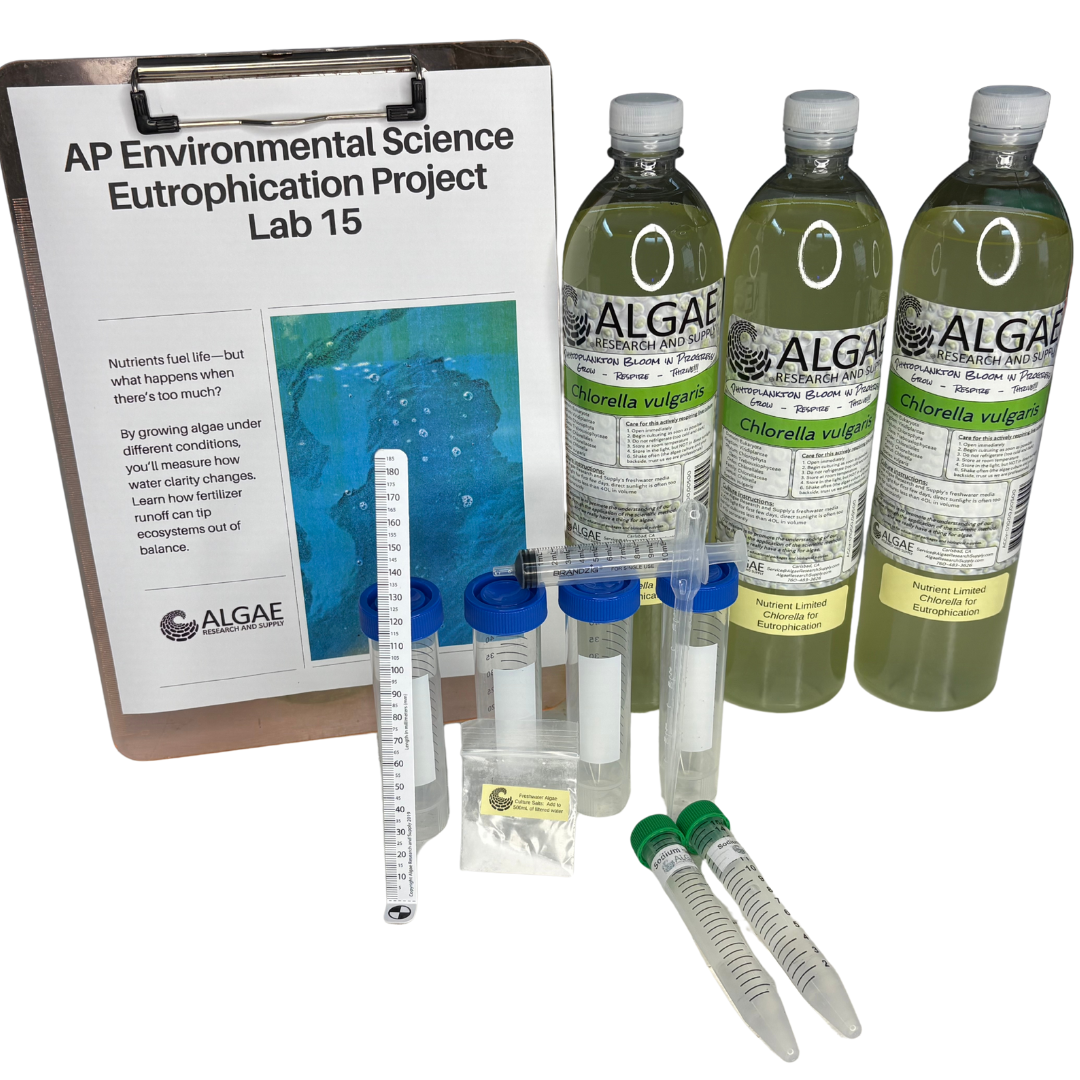
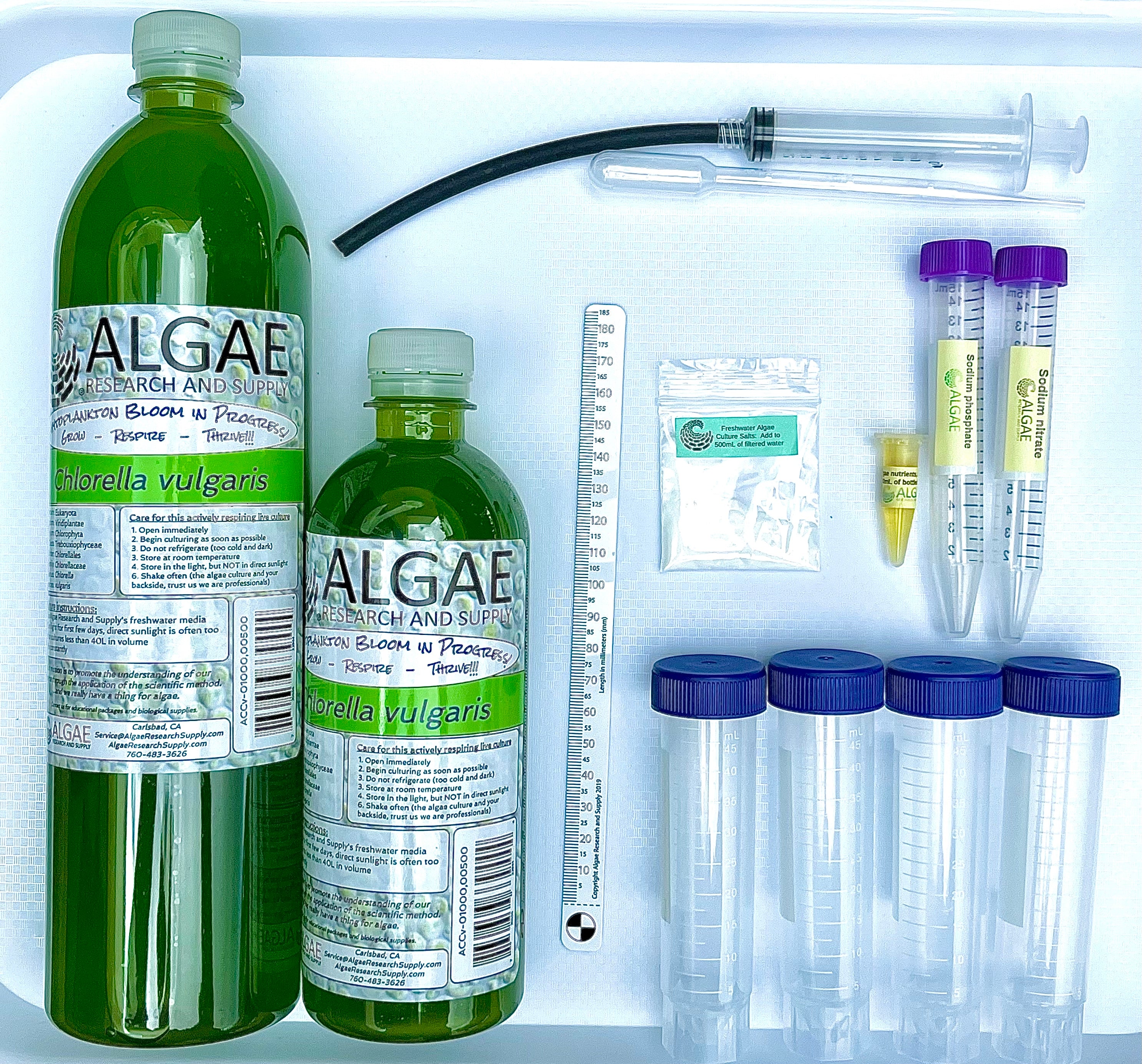
What the kit does: Our Eutrophication kit is built for Lab 15.
Free downloads
Our Lesson Plans
Eutrophication and Nutrient Pollution
Status: Being written now. The download buttons appear on this card when it is finished.
Nitrate Removal Over Time
Status: Being written now. The download buttons appear on this card when it is finished.
Kits for these lessons