


Middle School Earth and Space Science
Human Consumption and Earth's Systems
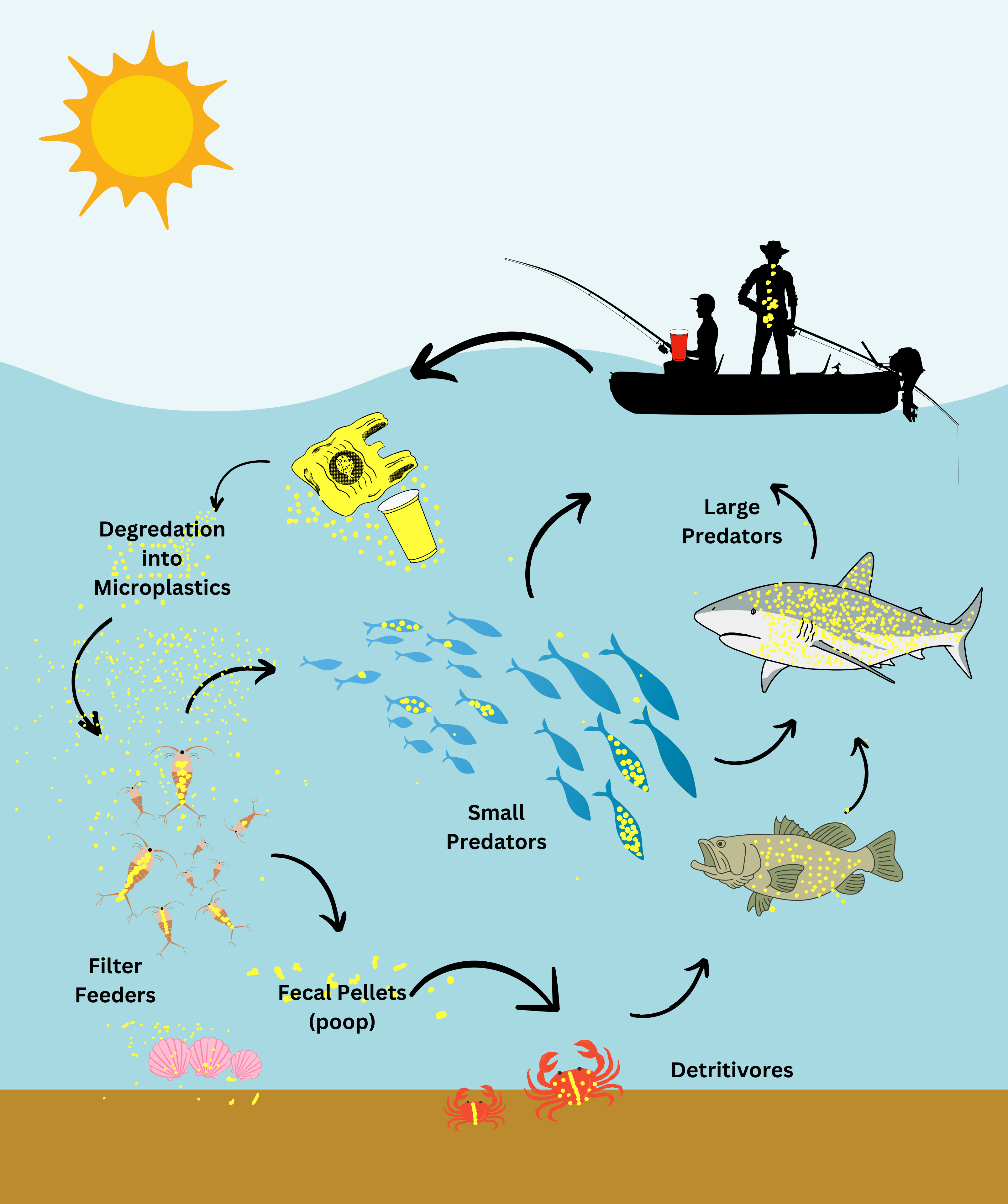
What we throw away ends up inside the animals.
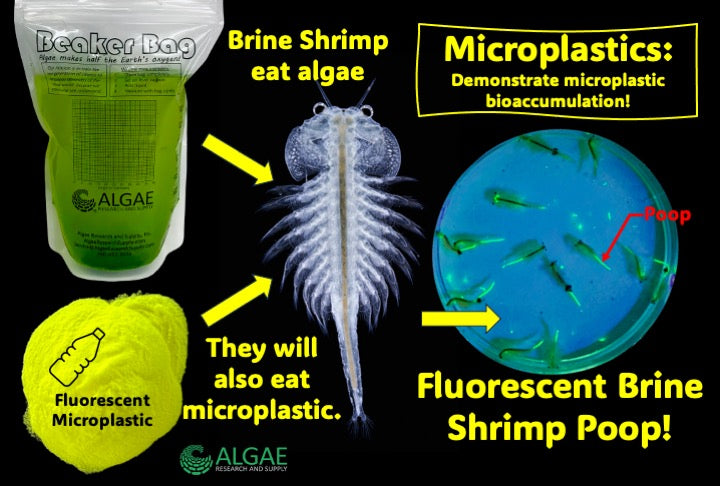
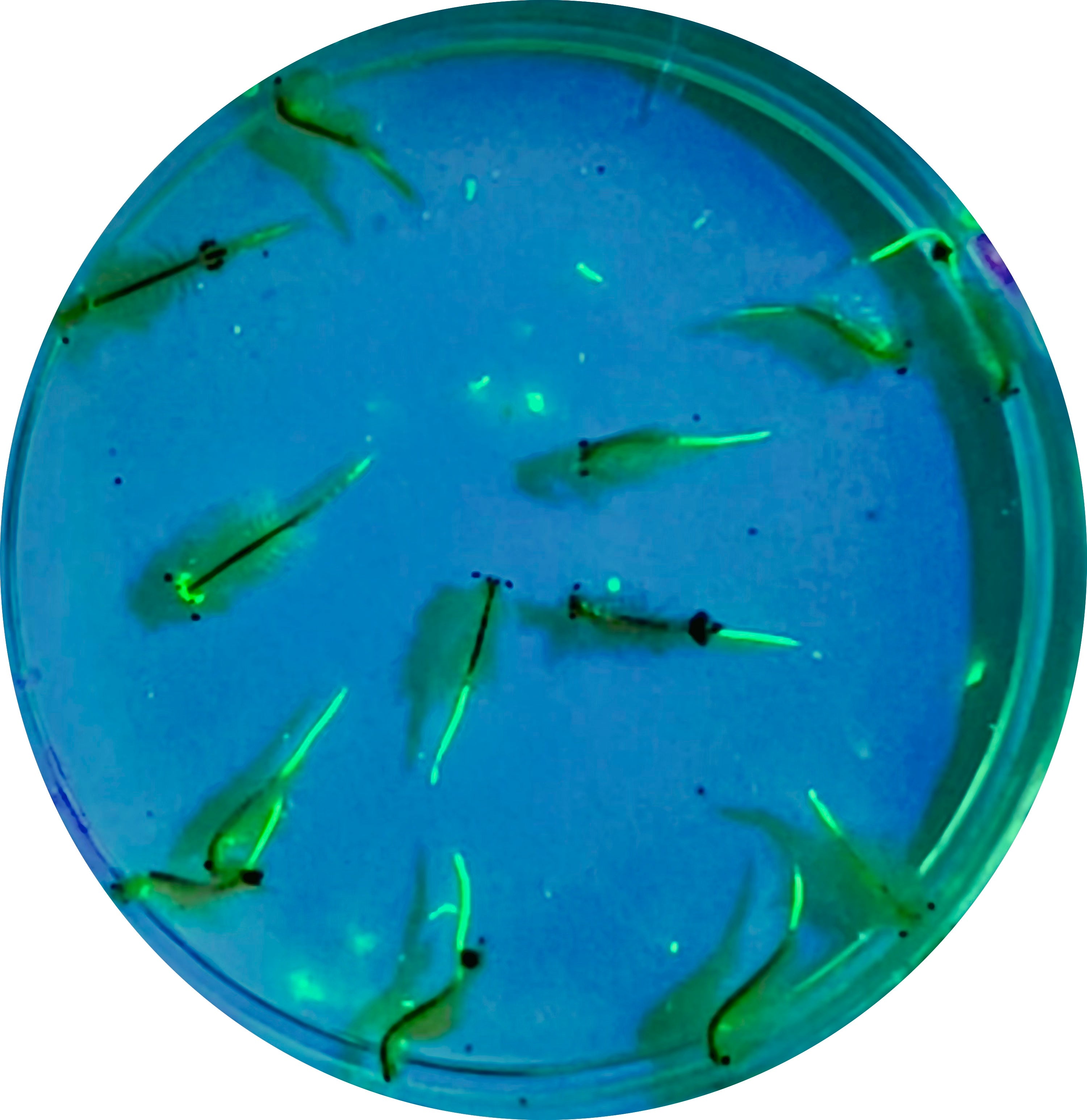
Plastic use leaves tiny particles in the water, and zooplankton eat them. Feed brine shrimp fluorescent particles, shine a black light, and students see the plastic glowing inside the animals. That is evidence for an argument, not a statistic.

How the lab meets it
What students do that satisfies the standard
NGSS MS-ESS3-4
Standard: Construct an argument supported by evidence for how increases in human population and per-capita consumption of natural resources impact Earth's systems.\nWhat the kit does: The glowing particles are the evidence. Honest fit: partial. Students still need outside data on plastic use to connect the animal to population and consumption.
Texas 7.11.B
Standard: Describe human dependence and influence on ocean systems and explain how human activities impact these systems.\nWhat the kit does: Brine shrimp stand in for the zooplankton at the base of the ocean food web. Students see plastic inside them and explain how our plastic use reaches the sea and the animals in it. Honest fit: partial. The kit covers human impact well. The human dependence on the ocean half comes from class discussion, not the lab.
Florida SC.7.E.6.6
Standard: Identify the impact that humans have had on Earth, such as deforestation, urbanization, desertification, erosion, air and water quality, changing the flow of water.\nWhat the kit does: Plastic in the water is a human impact on water quality, and students see it for themselves glowing inside the animals under a black light.
Free downloads
Our Lesson Plans
Microplastics and Brine Shrimp
Status: Being written now. The download buttons appear on this card when it is finished.
Kits for these lessons
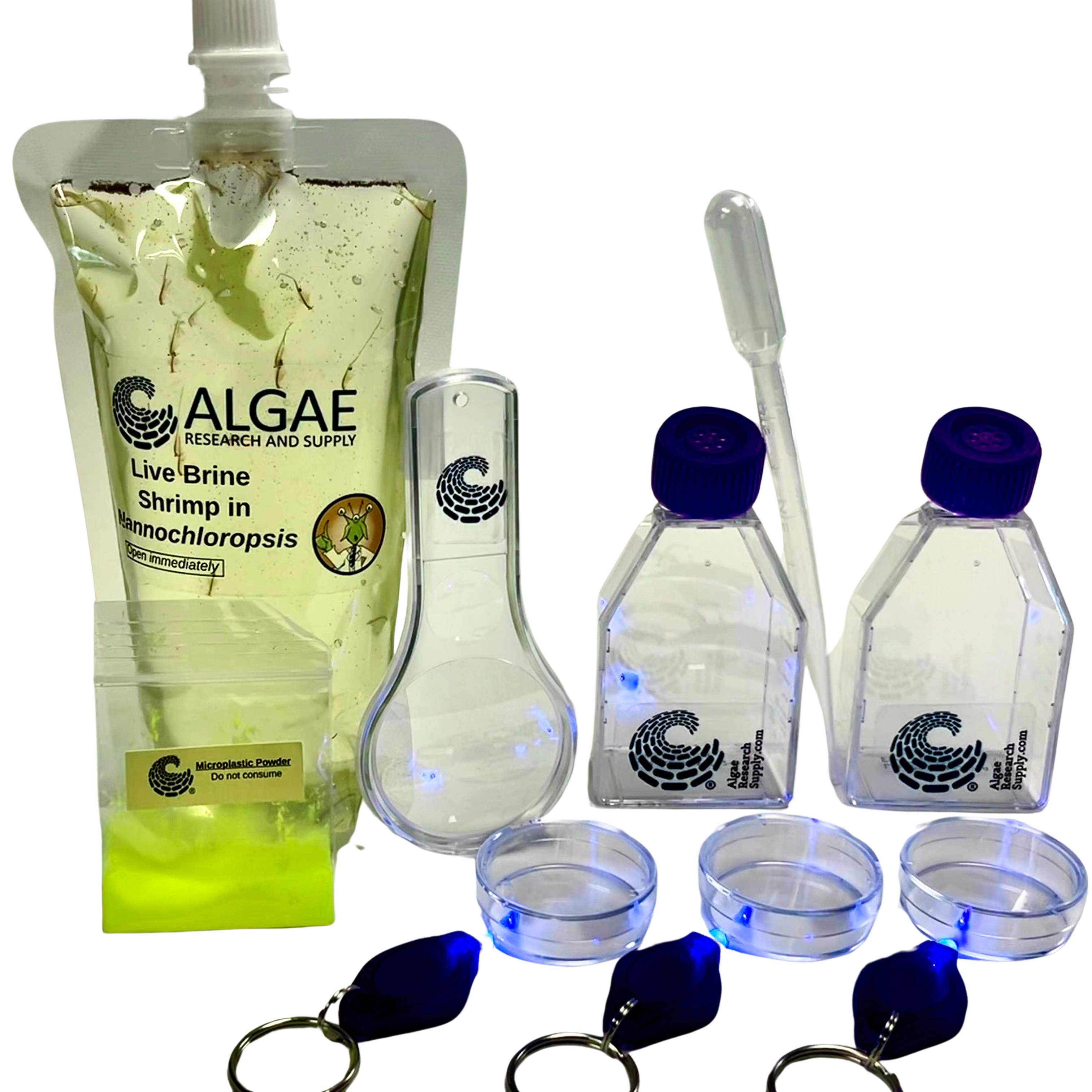
Fluorescent Microplastic Powder