
Middle School Life Science
Interactions and Food Webs
Add a grazer and the whole bag changes.
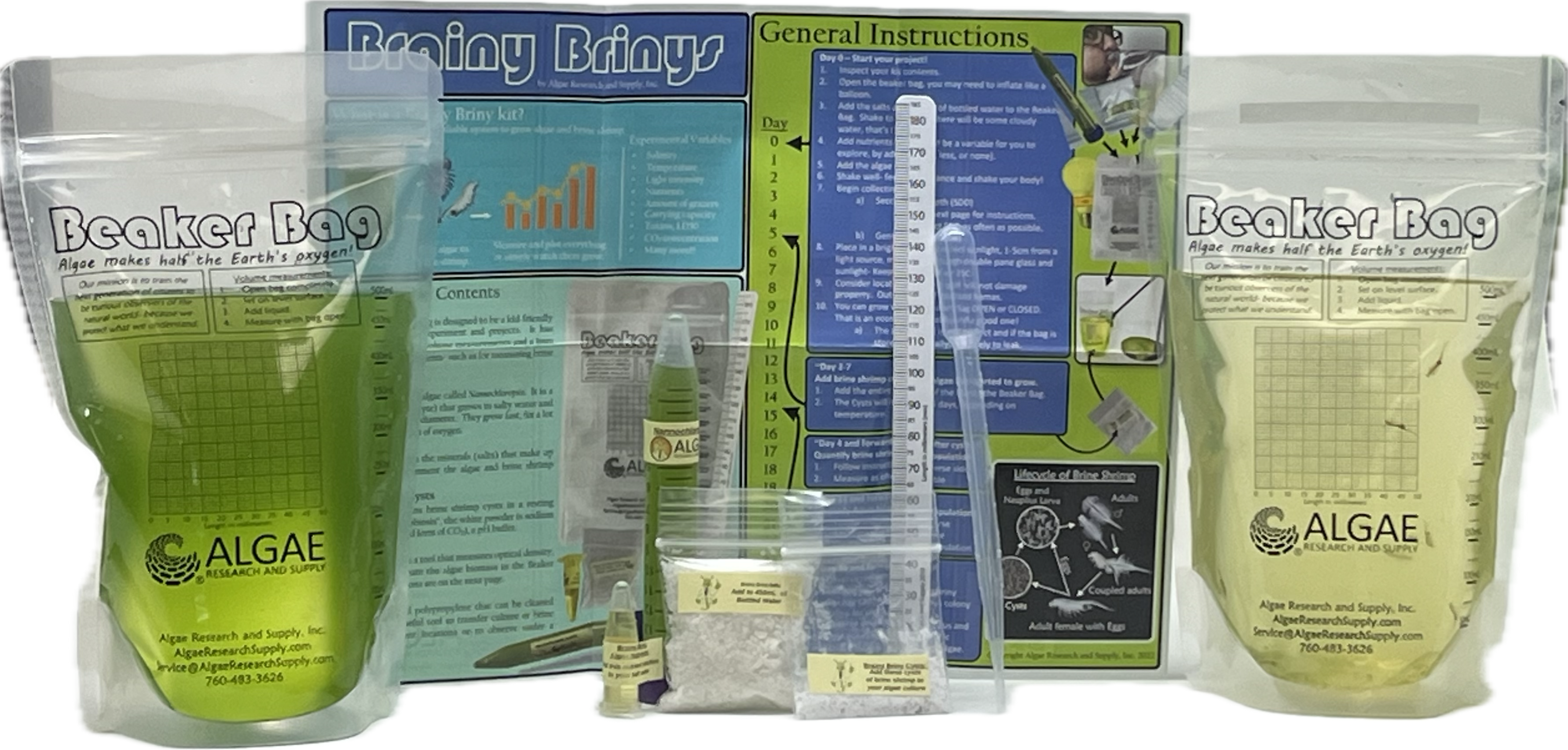
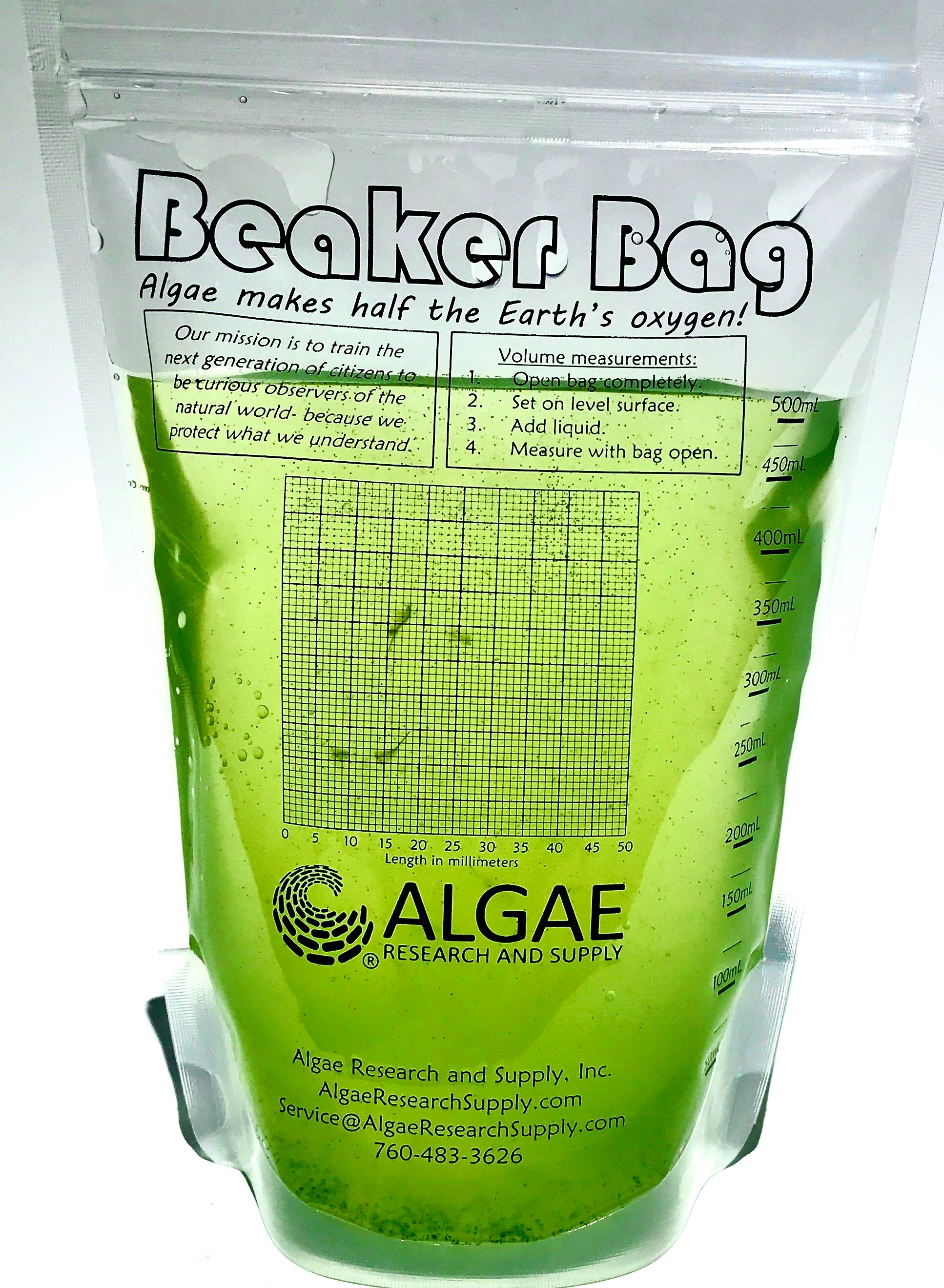
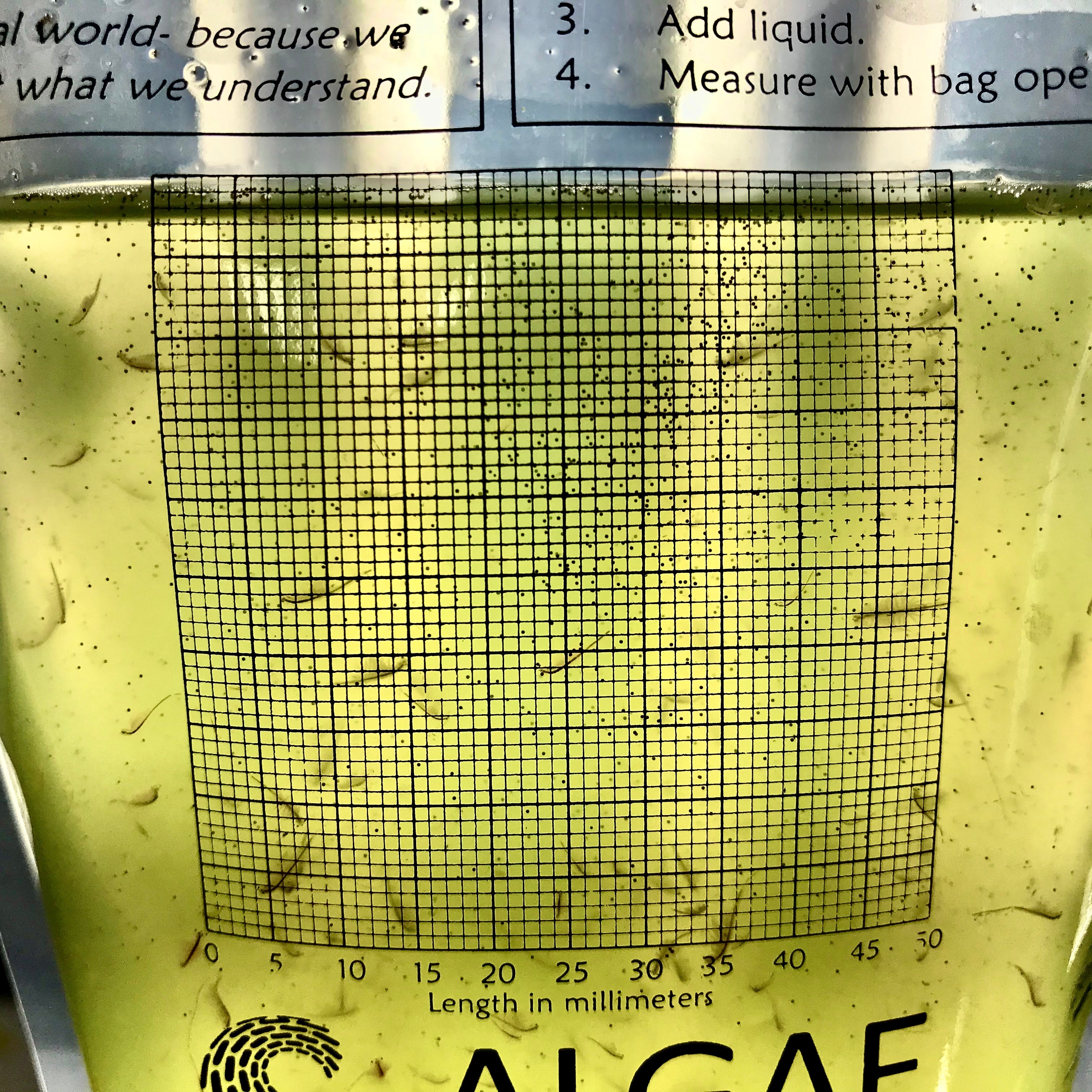
Brine shrimp grazing on algae is a consumer and producer relationship students can watch in a bag. Compare a bag with algae alone to one with brine shrimp added, and the difference in how green the water stays is the interaction, measured.

How the lab meets it
What students do that satisfies the standard
NGSS MS-LS2-2
Standard: Construct an explanation that predicts patterns of interactions among organisms across multiple ecosystems.
What the kit does: Students predict what the brine shrimp will do to the algae, run the bags, and explain the pattern they see. Honest fit: the bag is one ecosystem, so comparing across multiple ecosystems takes a class discussion to finish the standard.
Texas 7.12.A
Standard: Diagram the flow of energy within trophic levels and describe how the available energy decreases in successive trophic levels in energy pyramids.
What the kit does: The bag has two real trophic levels, algae as the producers and brine shrimp as the consumers. Students diagram the energy moving from one to the other and use how much algae it takes to feed far fewer brine shrimp to explain why the pyramid narrows.
Florida SC.7.L.17.1
Standard: Explain and illustrate the roles of and relationships among producers, consumers, and decomposers in the process of energy transfer in a food web.
What the kit does: Students watch a consumer change its producer as the brine shrimp graze the algae down. Bacteria in the water break down waste and return nutrients to the algae, so all three roles are in the bag for students to illustrate.
Free downloads
Our Lesson Plans
Let's Add a Primary Consumer
Status: Being written now. The download buttons appear on this card when it is finished.
A Dynamic Food Web
Status: Being written now. The download buttons appear on this card when it is finished.
Kits for these lessons