
Middle School Life Science
Cycling of Matter and Flow of Energy
Only light gets in. Everything else goes around.
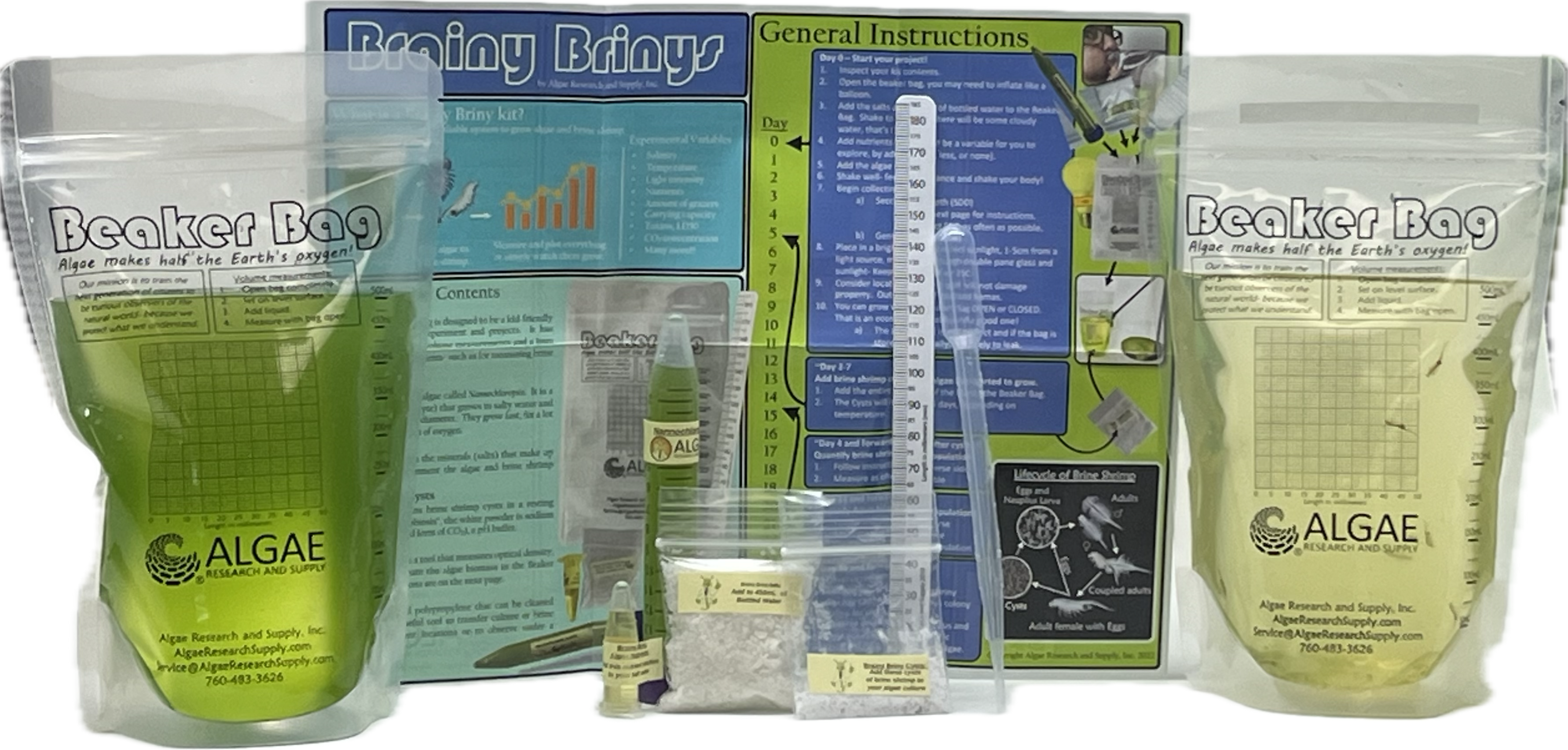
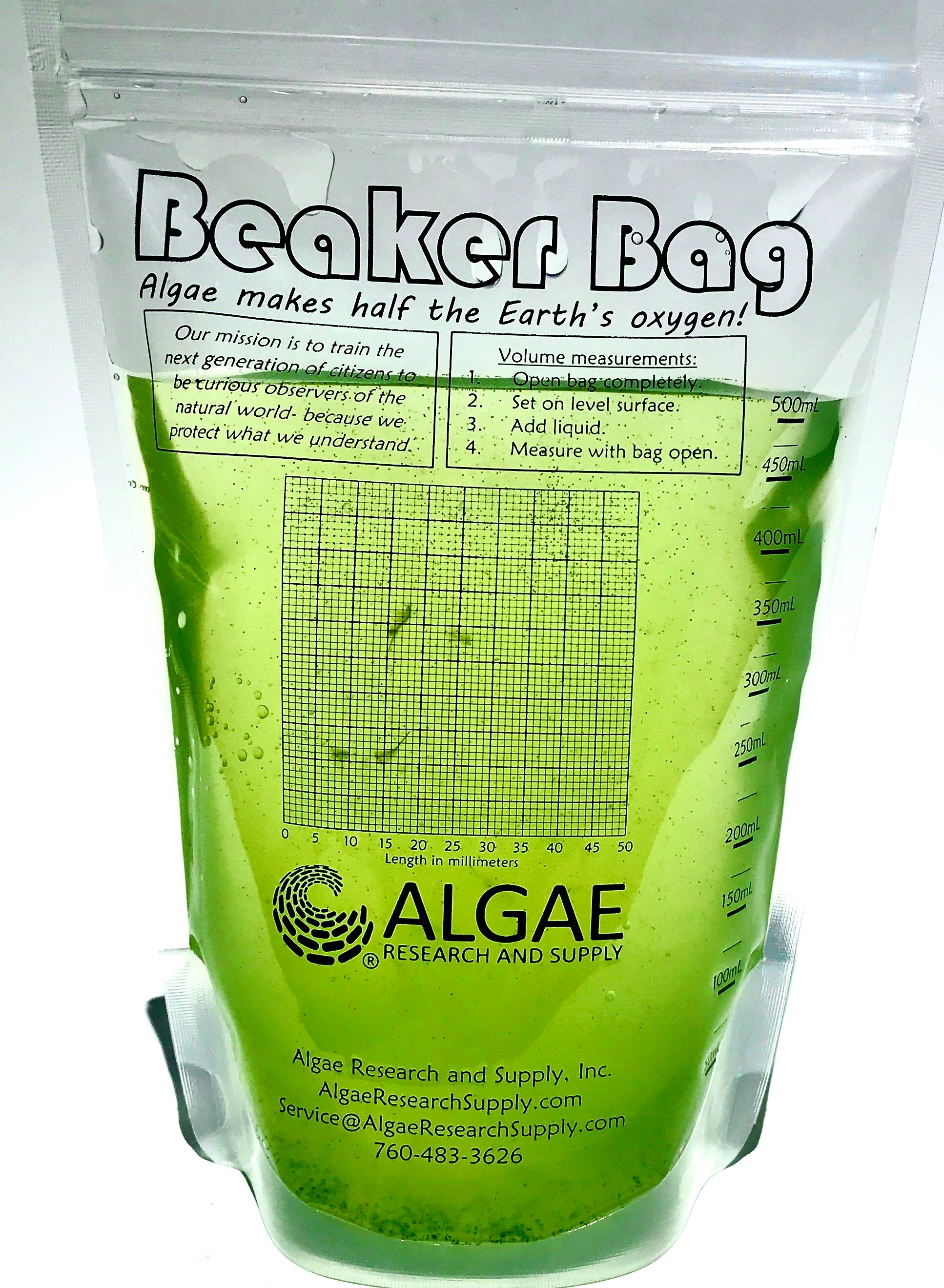
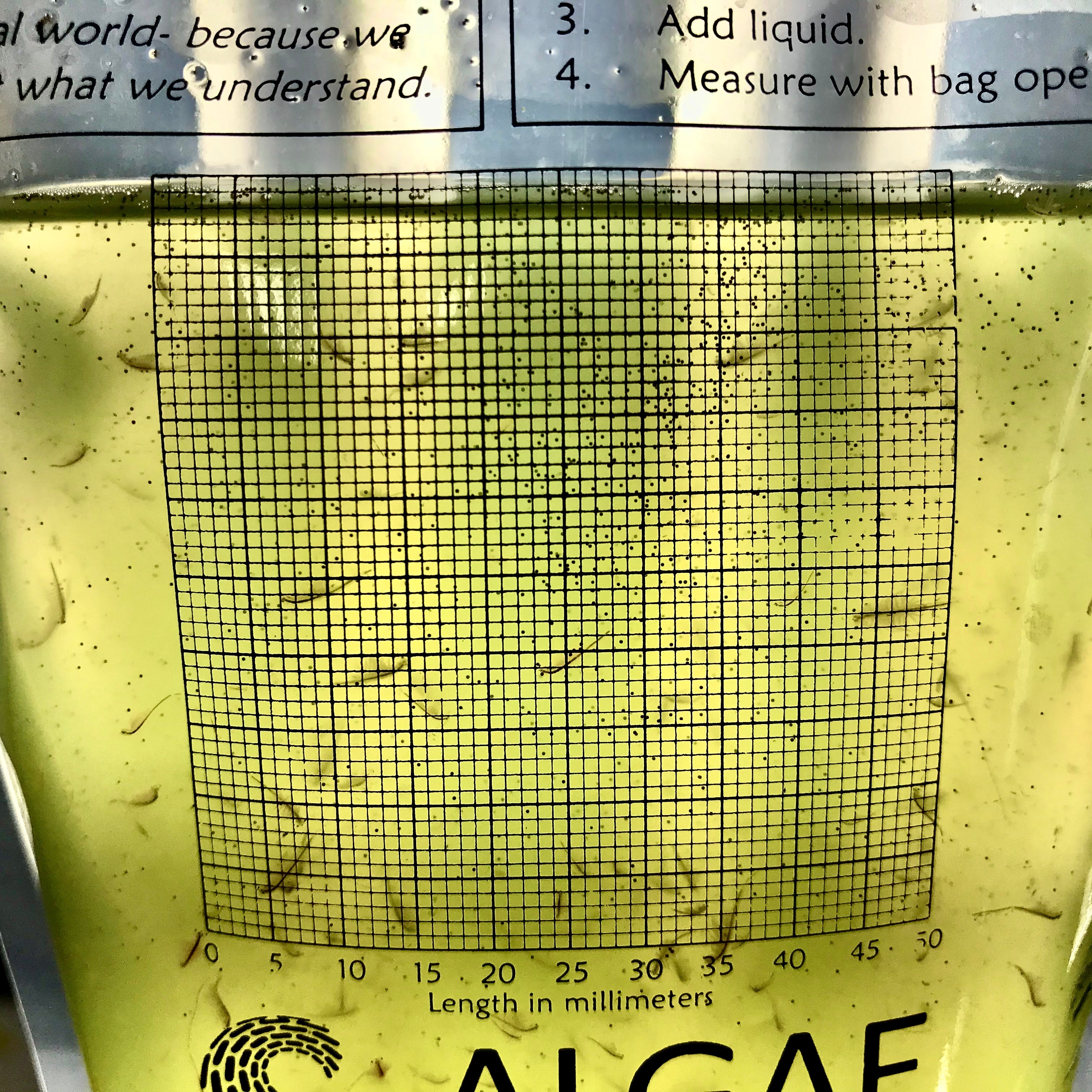
Light goes in, algae grows, brine shrimp eat it, and the nutrients cycle back through the water. The whole loop sits sealed in one bag, so students can model it knowing nothing entered or left except light.

How the lab meets it
What students do that satisfies the standard
NGSS MS-LS2-3
Standard: Develop a model to describe the cycling of matter and flow of energy among living and nonliving parts of an ecosystem.
What the kit does: The sealed bag is the model. Students draw what moves between the light, the water, the algae and the brine shrimp, and test it against what they measure.
Texas 7.12.B
Standard: Describe how ecosystems are sustained by the continuous flow of energy and the recycling of matter and nutrients within the biosphere.
What the kit does: The sealed bag is a small biosphere. Light is the only thing coming in, and the nutrients the algae use pass through the brine shrimp and back into the water. Students describe both the steady flow of energy and the recycling of matter from one bag they watched for days.
Florida SC.7.L.17.1
Standard: Explain and illustrate the roles of and relationships among producers, consumers, and decomposers in the process of energy transfer in a food web.
What the kit does: Students trace energy from the light into the algae and then into the brine shrimp that eat it. Waste broken down in the water feeds the algae again, so producers, consumers and decomposers all show up in the same model.
Free downloads
Our Lesson Plans
A Dynamic Food Web
Status: Being written now. The download buttons appear on this card when it is finished.
Quantifying Brine Shrimp Biomass
Status: Being written now. The download buttons appear on this card when it is finished.
Nitrate Removal Over Time
Status: Being written now. The download buttons appear on this card when it is finished.
Kits for these lessons